Running an electrical business without the right software gets messy fast. Calls go unanswered while you’re on a job site. Estimates live on paper notes that are easy to lose. Dispatching turns into a guessing game, and small delays start costing real money.
From the first customer call to the final invoice, the right tools make it easier to manage jobs, teams, and cash flow. And you can do it all without adding more administrative work to your day.
In this guide, we’ll break down the best electrical business software tools to consider. We’ll look at what they do best and how to choose the right one for your business, including traditional and AI electrician tools.
7 Best electrical business software tools you should know
When it comes to business software tools, there’s no one-size-fits-all solution. Here arethe electrical business software tools worth considering, including price, what each one does well, and who it’s best for:
| Provider | Starting price | Standout features | Best for |
|---|---|---|---|
| Quo | $15 per user per month | Unlimited calling and texting to the US and Canada, AI call summaries, transcriptions, and a 24/7 AI voice agent | Electrical companies that want to capture more leads, answer calls from the field, and centralize customer communication |
| Jobber | $109 per month, up to five users | End-to-end job scheduling, quoting, and invoicing in one dashboard | New or growing electrical teams that need simple job management without heavy customization |
| Housecall Pro | $59 per month for one user | Built-in email and SMS marketing tools on every plan | Electrical businesses focused on customer retention, reviews, and outbound marketing |
| FieldPulse | Custom pricing | Custom workflows and real-time inventory tracking | Small electrical contractors who want more control over processes and field operations |
| ServiceTitan | Custom pricing | Enterprise-grade dispatching, analytics, and ad tracking | Large electrical businesses with multiple teams, locations, and high job volume |
| Procore | Custom pricing | BIM coordination and commercial project collaboration | Commercial electrical businesses working on large, multi-stakeholder builds |
| QuickBooks | $19 per month | Job-level financial tracking and cash-flow visibility | Electrical businesses that need reliable accounting and financial reporting |
1. Quo: Best electrical business phone software for fast-growing contractors

Pros
- Unlimited calling and messaging in the US and Canada
- Local and toll-free numbers
- Shared numbers to split responsibility for incoming calls and messages
- Call recording is available on every plan
- AI-generated call summaries and transcriptions
- 24/7 AI voice agent to answer calls automatically
- 8,000+ integrations, including Jobber, HubSpot, and Salesforce
- Mac, Windows, Android, iOS, and web apps are available
Cons
- Can’t verify accounts through two-factor authentication*
*Nearly all virtual phone numbers share this problem. For safety reasons, companies like Facebook, Uber, and Google rarely let you authenticate accounts through a virtual phone number.
Quo, formerly OpenPhone, is a VoIP-based business phone system designed for small and growing service teams. VoIP stands for Voice over Internet Protocol. This means Quo sends calls and texts over an internet connection instead of traditional phone lines.
For teams that need high-performing electrician phone systems, this setup makes communication more flexible. Calls and texts come through Quo’s mobile and desktop apps, so your team can keep the conversation going in the office or in the field. You can also see when an incoming call is work-related versus personal, so you can prioritize which calls to take.
Here’s how Quo works especially well for electrical contractors:
- Shared numbers distribute responsibility for incoming calls and texts. Any available team member can respond to a customer inquiry, which helps prevent missed leads when crews are on job sites.
- Our 24/7 AI voice agent, Sona, handles calls during and after business hours. You can train Sona on your company details and set custom scripts based on different caller needs. This helps standardize home service call flows for new job requests, scheduling questions, and urgent issues.
- Field service management integrations keep all communication in one place. Quo can log phone communication in your field service platform, so no client details slip through the cracks.
- Photo and video messaging, or MMS, lets technicians send important updates directly to customers. These can include proof of service, job updates, or before-and-after photos.
- Automated texting and SMS auto-replies help you respond when you’re busy, without leaving customers waiting.
- Team collaboration tools make it easy to work together. For example, with user-friendly internal threads, you can tag team members next to customer interactions and assign follow-up tasks in real time.
Check out how Quo plays a pivotal role in Steve Hunsaker’s million-dollar phone and lead tracking system:

Try Quo for free. Sign up today for our seven-day trial. Then, when you’re ready, move any existing US, Canadian, or North American toll-free number to Quo for free.
Key features of Quo
- Shared numbers and call routing
- AI-generated call summaries and call transcriptions
- Drag and drop call flow builder
- Automated SMS workflows via Zapier and Make
- Integrations with field service and CRM tools, including Jobber
- Call analytics and insights
- Contact properties and contact notes
- Mobile apps for iOS and Android, plus desktop and web apps
Quo pricing
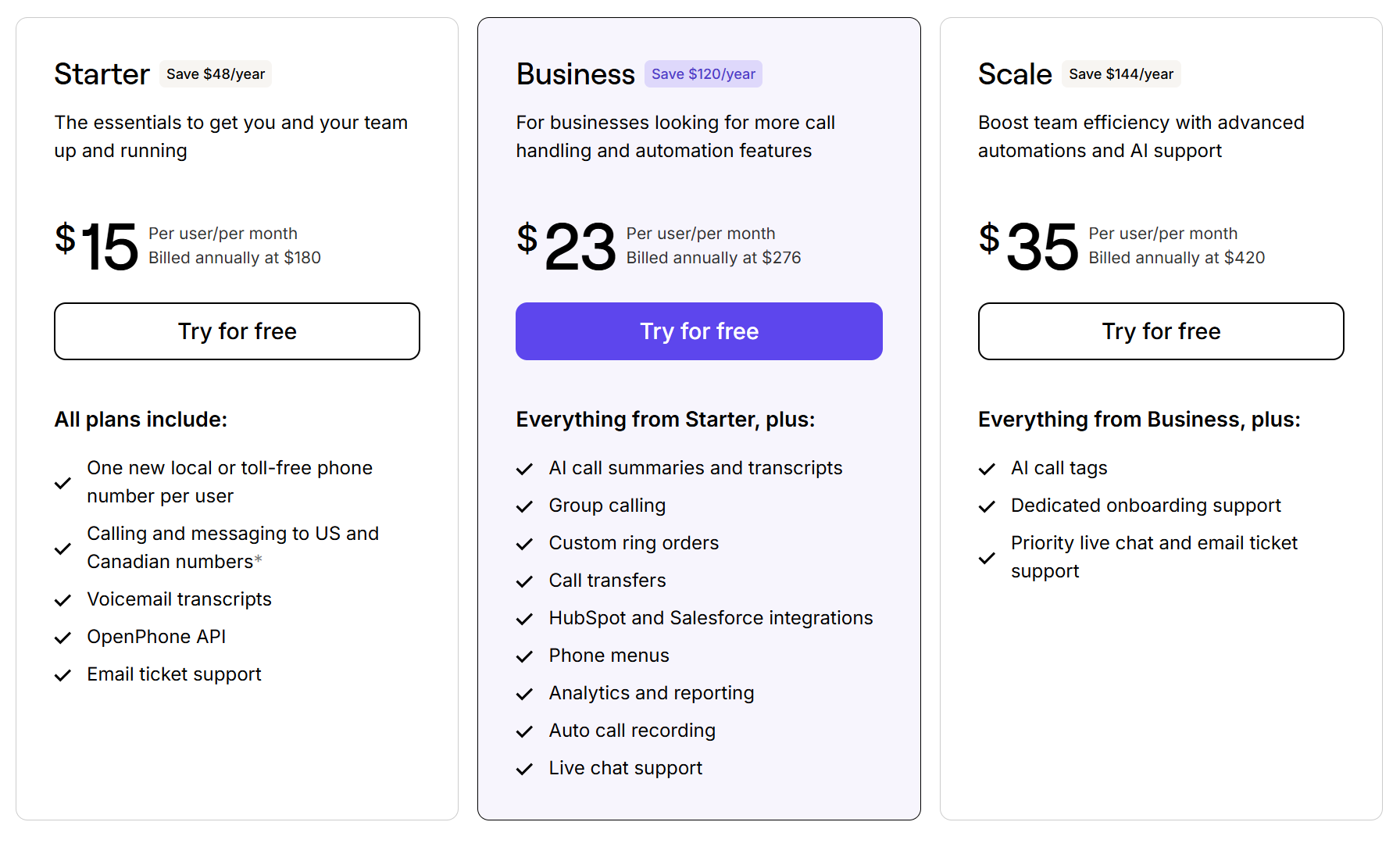
Quo offers three plans for you to choose from:
- Starter: $15 per user per month for free calling to US and Canadian numbers, one local or toll-free phone number per new user on your account, voicemail transcripts, and more
- Business: $23 per user per month to access group calling, call transfers, Jobber, HubSpot and Salesforce phone integrations, AI call transcripts, and more
- Scale: $35 per user per month for AI call tags, dedicated onboarding, inbound phone support, and priority chat and email support

💡Further reading: See how Quo helps Pink’s Windows stay personal while scaling to 75+ locations
2. Jobber: Best electrical contracting business software for new teams

Pros
- Customer-facing client hub
- Real-time job scheduling
- Professional invoicing
Cons
- Marketing tools are only available as add-ons
Jobber is a cloud-based business management platform for home service professionals. It handles the office side of your electrical contractor business so you can focus on your customers in the field. Jobber connects every step from the first customer call to final payment.
Its real-time job scheduling shows your team’s availability at a glance. If an emergency call comes in, you can drag and drop it onto the nearest technician’s schedule. This sends an instant notification to their mobile app so they can respond quickly.
Jobber also includes a customer-facing client hub. Customers can use the portal to approve quotes, check appointments, and pay invoices on their own. This helps your office staff save time and gets you paid faster with credit card processing built in.
Simplify your customer communications by integrating Jobber with Quo. Once connected, you can automatically log calls and texts with Jobber contacts. When a new customer comes in through Quo, you can also automatically create a new client record in Jobber. All your information stays synced between the two platforms so that nothing slips through the cracks.

Key features of Jobber
- Drag-and-drop scheduling with route optimization
- Two-way texting with clients
- Consumer financing to help clients afford larger jobs
- Digital forms and checklists for safety inspections
- Automated follow-ups on quotes and unpaid invoices
Jobber pricing

Jobber’s pricing includes three plans:
- Connect: $129 per month for up to five users, job booking and scheduling, and quotes and invoices
- Grow: $249 per month for up to 10 users, job costing, and workflow automations
- Plus: $449 per month for up to 15 users, marketing suite, and receptionist
3. Housecall Pro: Best for marketing your electrical business

Pros
- Marketing features are included in each plan
- Mobile check deposit is available
Cons
- Additional users require an upgrade
Housecall Pro is a cloud-based field service management tool that includes marketing features in every plan. Unlike other platforms that lock marketing tools behind expensive add-ons, Housecall Pro gives you access to:
- Email and SMS campaigns to reach customers directly
- Automated review requests that go out to Google, Facebook, or your website
- Tools to build your online presence without third-party software
The platform also includes mobile check deposit for faster payment processing. If a client wants to pay with a check, your technicians can snap a photo of it on site instead of driving to the bank. This speeds up cash flow and gets you paid faster.
Housecall Pro also includes a job costing feature that tracks material costs, labor, and profit margins for each project. You can use this to see which jobs are most profitable and price future work more accurately.
One thing to note: Housecall Pro’s Max plan covers up to eight users. If your team grows beyond that, you’ll pay additional fees per user each month.
Want to automate your texts to customers when they book a new job with you? With Zapier, you can connect Housecall Pro and Quo to send appointment confirmations automatically. Here’s a Zap template that you can use:
Key features of Housecall Pro
- Drag-and-drop scheduling
- Job status text alerts
- Mobile invoicing with instant payouts
- QuickBooks Online sync
Housecall Pro pricing

Housecall Pro offers three plans for electricians to choose from:
- Basic: $59 per month for one user, scheduling and dispatching, and review management
- Essentials: $149 per month for up to five users, email marketing, and employee GPS tracking
- MAX: $299 per month for up to eight users, advanced custom reporting, and dedicated onboarding support
Additional add-ons are available for sales pipeline tracking, websites, accounting, and payroll.
4. FieldPulse: Best for customizable electrical service management in the field

Pros
- Live inventory tracking
- Step-by-step process mapping
- Dedicated customer success specialist
Cons
- No transparent pricing available
FieldPulse is field service management software tailored for smaller electrical contractors. With this tool, you can customize job templates and project stages to match your business processes. Your technicians can also generate estimates and capture signatures on site from their mobile devices.
FieldPulse provides many specialized tools for operations. For example, you can use smart route optimization to map efficient routes that save on fuel and travel time. It also lets you track inventory in real time across warehouses and trucks. You can get low-stock alerts to prevent stockouts on job sites.
FieldPulse also lets you create custom checklists and forms for each job. This helps you keep work consistent and meet compliance requirements.
However, FieldPulse isn’t the most transparent when it comes to pricing. Although it lists three plans for electrical contractors to choose from, the pricing for each isn’t publicly available. You’ll need to contact their sales team to get a quote.
Key features of FieldPulse
- Asset tracking for generators and panel boards
- On-site estimate builder with electrical pricebook
- Real-time GPS tracking
- Customer portal
- Custom job workflows and branded forms
FieldPulse pricing
FieldPulse’s offerings include three plans:
- Essentials: Includes customer management, scheduling, estimates, and invoicing
- Professional: Includes everything in Essentials, plus project management and QuickBooks sync
- Enterprise: Includes everything in Professional, plus multi-location management and Open API access
To get a quote, you’ll need to contact FieldPulse’s sales team.
5. ServiceTitan: Best for large electrical contractors

Pros
- Smart route optimization
- Real-time job costing
- Ad marketing and performance tracking
Cons
- No transparent pricing available
If you’re a large electrical contractor looking to manage operations at scale, ServiceTitan may be right for you. It helps electrical teams handle marketing, project management, and financial reporting from one system. It also connects with your existing tools through enterprise-grade APIs. You can sync data across accounting software and custom CRM tools.
ServiceTitan offers features designed for high-volume electrical businesses. It provides ad marketing analytics that track ROI on your ad spend. When a customer calls, the system identifies which ad triggered the call. You can then focus spending on campaigns that bring in customers.
ServiceTitan also offers schedule optimization. It assigns jobs based on technician skills, location, and job profitability. This helps you send your most experienced electricians to high-value projects.
ServiceTitan works best for enterprise electrical businesses with large teams and multiple locations. If you’re a smaller contractor just getting started, ServiceTitan is probably out of your budget.
Want to automate your texts to customers when they book a new job with you? With Zapier, you can connect ServiceTitan and Quo to automatically send messages to new customers. Here’s a Zap template that you can use:
Key features of ServiceTitan
- AI-powered dispatch
- Warehouse and truck inventory tracking
- AIA billing for commercial projects
- Integrations with Sage Intacct and QuickBooks
ServiceTitan pricing
ServiceTitan gives you three plans to pick from:
- Starter: Offers access to dispatching, scheduling, invoicing, and pricebook
- Essentials: Offers everything in Starter, plus mobile estimates and payroll management
- The Works: Offers everything in Essentials, plus configurable payroll and advanced reporting
To find out pricing, you’ll need to request a demo from ServiceTitan’s sales team.
6. Procore: Best for commercial electrical contractors

Pros
- BIM modelling for construction projects
- Resource tracking tools
- Daily inspection and incident logs
Cons
- Rigid customization options
- No transparent pricing available
Procore is a construction management platform designed for large commercial projects with multiple stakeholders. General contractors use it most often, but it’s also a strong fit for commercial electrical contractors working on complex builds.
For electrical teams, Procore centralizes drawings, documents, RFIs, and submittals in one system. This makes it easier to coordinate with general contractors, architects, and other trades. No email chains. No outdated plans. Everyone works from the same source of truth, which reduces potential duplicate work and miscommunication.
Procore also supports BIM coordination. This lets electrical contractors align layouts with structural and mechanical plans. It helps catch conflicts early and avoid costly changes later in the project.
That said, Procore isn’t designed for small service teams. Customization is limited, and large files can slow performance. The platform can also generate a high volume of notifications. Procore works best for commercial contractors managing large projects with dedicated resources.
Key features of Procore
- Drawing and document management
- Field labor tracking
- RFIs and submittals management
- BIM coordination
- Budget management
Procore pricing
Procore uses a volume-based pricing model tied to your annual construction volume. To get a quote, you’ll need to request a demo from Procore’s sales team.
7. QuickBooks: Best for managing accounting for electrical businesses

Pros
- AI-assisted features
- Live bookkeeping support as needed
Cons
- AI-powered reconciliation requires an upgrade
- Fixed asset tracking requires an upgrade
QuickBooks is accounting software built to help electrical contractors track money without spreadsheets. It focuses on the financial side of your business, not field operations.
For electrical teams, QuickBooks makes it easier to manage invoices, expenses, and payroll in one place. You can track job-related costs and understand which projects are actually profitable. Transactions sync directly from your bank accounts, which reduces manual entry and errors.
QuickBooks also offers live bookkeeping support if you need help keeping your books accurate and up to date. As your business grows, higher-tier plans unlock more advanced features. These include reporting, forecasting, and user permissions.
QuickBooks is a reliable foundation for managing cash flow and staying tax-ready year-round. But you should keep in mind that some features require upgrades. AI-powered reconciliation and fixed asset tracking aren’t available on QuickBooks’ entry-level plans.
Key features of QuickBooks
- Real-time income and expense tracking
- Custom invoices with automated payment reminders
- Job and project profitability reporting
- Payroll and contractor payment management
- Bank syncing and transaction reconciliation
- Tax prep tools and downloadable financial reports
- Integrations with field service and CRM platforms
QuickBooks pricing

QuickBooks offers four plans for teams to choose from:
- Simple Start: $19 per month for one user to access smart expense organization, automated bookkeeping, tax deductions, and bill management
- Essentials: $37.50 per month for three users to access Accounting Agent, multiple currencies, and time tracking
- Plus: $57.50 per month for five users to access AI-powered profit and loss insights, anomaly detection and resolution, and budgeting
- Advanced: $137.50 per month to access custom user management and permissions, revenue recognition, forecasting, and custom dashboards
Benefits of electrical business software tools
Still unsure about why your business needs specialized software tools? Electrical business software platforms can help you and your team acquire customers faster and operate more efficiently. Here are the benefits of these tools:
1. Reduce missed calls and lost leads
When you’re on a job site, it’s impossible to answer every call. Electrical business phone software helps close that gap. With shared numbers and an AI answering service, customers can always reach your business, even when your team is busy. Instead of going to voicemail, calls are answered, routed, or captured with clear details for follow-up. This removes the need for a separate electrician answering service and helps you capture every lead.

With Quo, calls, texts, and voicemails are shared across your team, so no lead is missed. When Quo is integrated with Jobber, your first intake call can automatically create a project in Jobber. That means less manual data entry and faster response times.
2. Improve your team’s operational efficiency
Dedicated job management software makes dispatching and routing far more efficient. Instead of juggling calls, texts, and schedules across different tools, everything lives in one system that everyone on your team can see.
Job details, customer information, and technician updates stay in sync across your software stack. That shared visibility reduces miscommunication, cuts down on repeat work, and helps every job move forward.
3. Provide more accurate project quotes quickly
Manual notes and rough estimates lead to pricing errors. Electrician service software replaces guesswork with structured data.
Virtual pricebooks and job history help technicians build quotes faster and with more confidence. Instead of estimating from memory or notes, teams can reference standardized pricing and past jobs to give quotes on the spot.
4. Optimize your team’s performance with analytics
Running a growing electrical business requires visibility into what’s working and what isn’t. Software analytics make that possible.
It’s important to track data like call activity, job completion rates, response times, and revenue trends. Over time, they help contractors spot patterns and adjust quickly. With clear data, it’s easier to coach technicians, improve scheduling, and fix bottlenecks early.
5. Track your cash flow in real time
Cash flow matters, especially for small and growing teams. Accounting software solutions give electrical contractors a clear picture of where money is coming in and where it’s going.
Tools like QuickBooks help track invoices, expenses, and payments in real time. That visibility makes it easier to stay on top of billing, plan for slow periods, and make informed decisions as your business grows.
How to choose electrical service software tools
Finding the best software for your electrical business takes some research. Here are five steps to help you evaluate your options.
- Identify your business needs. Start by figuring out which areas of your operations require software support. If you’re running a small contracting team, it might be basic scheduling and dispatching that you need most. But if you’re managing multiple teams and complex projects, you may need inventory management or job estimating software. Understand what you need from business software and then evaluate accordingly.
- Estimate your budget. How much are you willing to spend on a platform? The answer to this will determine which software tools are within reach. Perhaps you want to spend more on customer-facing tools that drive revenue. Or you might prefer to keep costs low with basic invoicing software. Just remember to factor in additional costs you might incur as you grow, like implementation fees and training.
- Evaluate your options. Review different options in each category and compare their features and value propositions. See how each platform handles work orders, service calls, and estimating. Also check if they integrate with the tools you already use in your business, like QuickBooks or your CRM.
- Check out reviews and ratings. Look for customer satisfaction feedback from other electrical contractors on sites like Capterra or G2. Pay attention to comments about customer experience and how the software handles service calls in the field.
- Trial different tools. Test how each tool performs for yourself before committing. Try the mobile app since your electricians will use it in the field for electrical jobs. Be wary of options that don’t offer a free trial or require large upfront payments.
Power your electrical service with Quo

The right electrical business software helps you stay organized as your workload grows. It keeps customer calls from getting missed and keeps finances from becoming guesswork.
Tools like Jobber, Procore, and QuickBooks handle scheduling, project management, and accounting. But communication still sits at the center of every electrical job. That’s where Quo fits in.
Quo brings calls, texts, voicemails, and AI-powered summaries into one shared workspace. Your team can respond faster from the field, collaborate more easily, and keep every conversation tied to the job. Engage with every customer and build strong relationships with them, even as you scale. Start your seven-day free trial and see how Quo helps support your business from the first call to final payment.
FAQs
Electrical business software is a category of digital tools built for electrical contractors. These tools help you manage your entire workflow from the first customer contact to final payment. You can handle job scheduling, dispatching, estimates, invoicing, and inventory from one system.
These tools operate in the cloud. This means they’re hosted on remote servers instead of on your office computer. You can access them from any device using an internet connection. Updates from the field appear instantly in your office since the software syncs data in real time.
Electrical business software costs vary depending on the tool’s focus and complexity. Dedicated tools like Quo typically cost less than general purpose business management platforms.
If you’re a small business with 1–5 users, expect to pay $15–$60 per month for dedicated tools. For general purpose business management platforms, pricing starts from $75 per month and can reach $250+ per month.