Your plumbing business is growing. That’s exciting! But it probably also means you’re juggling more calls, jobs, and changes than ever before. Maybe your team’s expanding, but your systems haven’t quite caught up.
That’s why you might be looking into AI plumbing tools. Of course, no artificial intelligence can replace your team, but it can help lighten the load, speed up admin work, and make it easier to stay on top of everything as you grow.
In this guide, you’ll find seven practical ways to use AI in your plumbing business, plus easy-to-use tools that can lighten the load.
1. Take calls 24/7 so you don’t miss leads
When you’re elbow-deep under a kitchen sink, hunting for the source of water damage, it’s easy for you and your team to miss incoming calls.
With an AI plumbing answering service, you can avoid missing calls and customers. And capture leads more quickly than your competitors, especially if you have a high call volume.
Sona is an AI voice agent built into Quo, the business phone system for plumbers. You can integrate Sona into your existing call flows. It answers calls 24/7, responds to FAQs using info you provide (like service areas or hours), and collects caller details for follow-up.
Each call also comes with a call summary and transcript, so you still have full visibility and control over Sona’s conversations.

2. Optimize team scheduling and dispatching
As a plumbing professional with a growing business, you often have more jobs and tech to manage, and less room for error. Without the right systems in place, it’s easy for things like double bookings, long drive times, or missed appointments to happen.
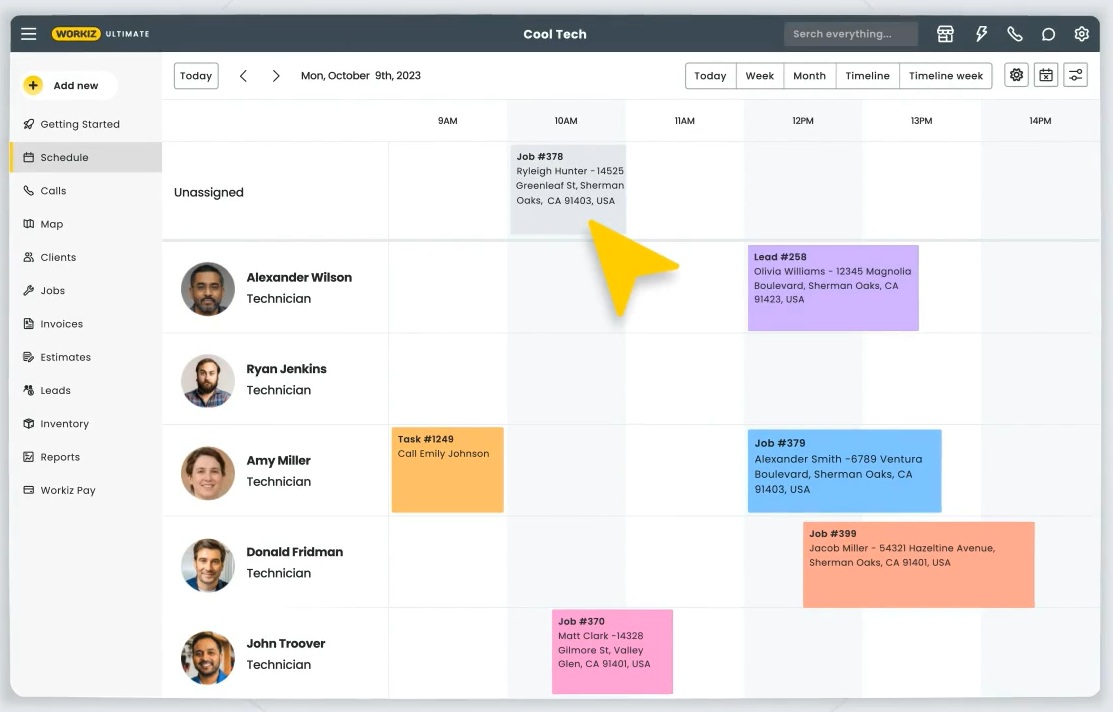
You can avoid that with AI scheduling and dispatching tools like Workiz. Its Genius Scheduling feature uses AI algorithms to:
- Assign jobs to the right tech based on availability, route, and current schedule
- Automatically fit new jobs into calendar gaps
- Prevent scheduling conflicts by calculating job duration and the travel time techs need
3. Follow up with leads faster by recording calls on autopilot
You’re at a job or on the road when a potential customer calls to request a quote or book an appointment. You promise to follow up later, but forget key details like their name, the service they wanted, or when they were hoping to schedule. It’s ok, it happens to the best of us.
Cue call recording AI tools like Quo. Quo captures the full conversation (like the job type, location, and urgency), so you can follow up accurately. With the Business plan, Quo automatically generates transcripts and call summaries to help you respond more quickly, stay organized, and keep potential jobs moving forward.
If you use Jobber, you can use our Quo Jobber integration to automatically sync call information into Jobber to keep your CRM up to date.

💡Pro tip: Transcripts are also useful for resolving disputes and clearing up misunderstandings. For example, if a customer forgets they approved a weekend emergency visit and has questions about the bill, you’ll have the proof in writing.
4. Automate invoice creation and get paid faster
You probably didn’t become a plumber to chase late payments or spend your evenings drafting invoices. But if you don’t have a full-time bookkeeper, the admin work can pile up.
AI invoicing tools like Intuit Assist (built into QuickBooks) help speed things up. Intuit Assist can:
- Generate invoices from your job notes, email messages, and photos
- Draft and send automatic payment reminders
- Suggest the payment methods most likely to get you paid the fastest

5. Speed up estimations so you can win more bids
You know how it goes — a homeowner wants a quote ASAP, but you’re stuck counting every fixture and fitting in their plumbing system manually. By the time you finish your takeoff, three other contractors have already submitted their bids.
AI plumbing estimate software like Togal.AI simplifies takeoffs so you can price jobs faster and with greater accuracy. Upload your plans, and the AI automatically identifies and counts all your plumbing fixtures, pipes, and components.
It even organizes hundreds of plan sheets automatically, so you’re not hunting through a stack of documents. Just make sure to double-check the counts, as these AI systems are still getting better at accuracy.
Togal.AI also has a ChatGPT-like chat feature that lets you ask questions in natural language (like “What are the key deliverables of the project?”), and it will pull answers directly from your plans and spec documents.

6. Quickly surface calls that need a manager’s review
Managers can’t review every call, but they still need to know when a customer is unhappy with a plumbing repair or when you’re getting more competitor mentions than usual.
That’s where Quo’s AI call tagging helps. It uses AI to analyze phone calls in real time and categorize them based on context so you can quickly spot and troubleshoot issues that need your attention.
Let’s say a customer complains about poor work or says they’re considering another contractor. In this case, the call tag might be “Upset customer” or “Competitor mention,” making it easy to jump in before the situation escalates.
It’s a fast way to surface what matters and improve customer service efficiency without having to listen to every call.

7. Handle frequently asked questions with chatbots
Tired of those 10 PM calls asking if you work weekends? Chatbots can help with call reduction by automatically answering common questions right from your website.
These virtual assistants use the information you provide (like pricing, availability, and service areas) to respond instantly to anyone who visits your site. They’re a good solution for handling routine inquiries and collecting site visitor information. They help you stay focused on your high-priority tasks or enjoy your downtime without getting pulled back into admin work.
Some reliable chatbot options include:
- Tidio: Tidio’s AI-powered chat agent, Lyro, integrates with your website and other channels like email to handle customer questions in 12 languages.
- Zapier Chatbots: A more customizable option, Zapier lets you build your chatbot how you like and set up automations to collect leads, send data to your CRM, or trigger follow-ups based on the conversation.
- Intercom Fin: Fin pulls answers from your existing knowledge base and responds using your brand’s tone of voice in 45 languages. It also integrates with tools like WhatsApp, Facebook Messenger, and WordPress.
Bring AI into your plumbing business with Quo (formerly OpenPhone)
The future of plumbing AI might include capabilities like predictive maintenance, smart leak detection, and AI-driven inventory management. But until these tools are available everywhere and are affordable, field service teams can use more accessible AI technology to grow their business.
Quo helps plumbing teams build deeper customer relationships at scale. With AI-powered call transcripts, summaries, AI call tagging, and Sona holding down the fort when you can’t answer calls or are on the go, you can keep customers happy and operations running smoothly.
Quo also helps growing businesses with functions like shared phone numbers to split responsibility for incoming calls, call routing and forwarding to send callers to the right place, text automations, and integrations with over 7,000 tools to keep everything in sync.
See how Quo AI helps you turn missed calls into booked jobs. Try Quo with our seven-day free trial.
FAQs
No. AI can’t replace skilled, hands-on work such as that in the plumbing industry. What it can do is help you save time on admin work, avoid mistakes like scheduling conflicts or missed follow-ups, and enhance customer support.
Plumbing companies can use AI tools to automate and simplify everyday tasks like:
– Answering calls
– Recording and tagging phone conversations
– Drafting estimates and invoices
– Scheduling appointments and dispatching techs
– Handling online FAQs via chatbots
The time it takes to implement AI tools for plumbing businesses depends on the complexity of the solution and your existing workflows. We can’t speak for other apps, but here’s how quickly you can get started with Quo:
– Call transcripts and recordings: Available automatically.
– AI call tags: Turn on our predefined tags in under a minute. Set up custom tags for your specific needs in just a few minutes. Learn more about how you can turn on AI call tags.
– Sona AI agent: A few minutes to upload your business info, or slightly longer if you’re creating knowledge pages manually.
AI tools are a cost-effective way to grow your business without stretching your team thin. They help plumbing businesses save time, generate leads, and improve customer interactions. For example, they can answer calls when you’re busy, schedule jobs efficiently, flag issues for review, and speed up estimating with takeoff tools. All of this helps you stay organized, respond faster, and win more business.