If you’re reading this, you likely know the sting of losing a lead or having one too many quiet days at the office.
Maybe your sales team is slow to follow up. Maybe no one knows who owns the lead. Or maybe you’re still relying on scattered notes and gut instincts instead of a clear process.
This guide breaks down how to build an inbound sales process that helps your team close deals faster — without a massive budget or complicated tech stack.
We’ll walk through each step and show you how a phone system for sales like Quo can streamline the process and improve sales collaboration.
What is inbound sales?
Inbound sales is the process of attracting and converting leads who come to you through your marketing efforts. Inbound marketing might include blog posts, social media, referrals, or website content like landing pages or customer success stories.
Instead of chasing cold leads, you’re engaging people who are already interested in what you offer. That makes for warmer conversations and higher conversion rates.
Inbound vs outbound sales: Which is better for small teams?
Outbound sales relies on reaching out to people who didn’t ask to hear from you — think cold calls, email blasts, and paid prospecting lists. It’s like knocking on doors and hoping someone answers.
Inbound sales is more like answering a knock. The person on the other side is already curious.
For small teams, outbound can be a grind. It’s:
- Expensive to scale: It requires heavy prospecting, research, list building, cold calling, and cold emailing.
- Time-consuming: For the small percentage who respond, you might have spent time contacting 100 others who don’t.
- Unsustainable: Small teams simply don’t have the bandwidth to play the high-volume numbers game outbound requires.
- Impersonal: Mass outreach is usually not personalized to the lead’s specific pain points, and when it is, it’s often based on assumptions due to a lack of data.
- Risky: Outbound can get you booted off platforms if you aren’t following a tool’s terms of service.
Inbound, on the other hand, is time- and cost-efficient, scalable, and leads to a faster sales cycle; your potential customers are already moving through the buyer’s journey on their own.
How to build an inbound sales process in 4 steps
Every inbound sales process will look different, but everyone should focus on four key points as they build, test, and optimize their approach:
1. Identify and research ideal customers
This might seem like a no-brainer, but it’s surprisingly easy to get this backward. Many teams create idealistic customer profiles based on who they think should buy from them instead of looking at who actually does.
Look at your current customers — the ones who love working with you, pay on time, and use your product or service to its full potential. What do they have in common? What problems were keeping them up at night before they found you?
Hunt for patterns. Maybe all your best clients are 50- to 200-person manufacturing companies drowning in spreadsheets. Or maybe they’re SaaS startups that hit $2M in annual recurring revenue (ARR) and suddenly realized their customer support was held together with duct tape and dreams.
Specifically, focus on:
- Industries where you consistently win deals
- Company sizes that see real ROI from your solution
- Specific roles that champion your product internally
- Pain points that make people actively search for solutions
- Goals that align with what you deliver
Use these insights to build buyer personas and create a high-quality, relevant content marketing plan that speaks directly to them.
2. Connect with leads
Have your inbound sales reps review the lead info — company website, size, industry, role, and what the lead wants to talk about — before reaching out. This gives you context.
Then connect via phone, email, or text.
Drew Johnston, Senior Product Specialist at Quo, sets the deadline at around two days:
“The faster you can get to leads, the better. Aim for 24 hours. After about two days, if a lead still hasn’t heard from you, they start to lose interest or forget they reached out in the first place.”
If you’re using a phone system for sales that integrates with your lead data, you can see everything about them before you dial.
It’s also important to personalize messaging based on what you know about the lead and their pain points. For example:
- If one of those 200-person manufacturing companies downloaded your inventory management guide, reference common inventory challenges that companies of their size face.
- If they filled out a form asking about workflow automation and they’re a growing SaaS startup, talk about the operational bottlenecks that come with rapid scaling.
Your goal at this stage is to nurture leads: build rapport, confirm who they are and what they’re dealing with, and set clear expectations for the conversation.
3. Explore their pain points and challenges
When you’re planning sales calls, you’ll want to prepare questions that help you dive deeper into their goals, pain points, and timeline to figure out if there’s a real fit.
A few you can ask:
- What are your top priorities in finding a solution?
- What other tools or approaches have you tried?
- I see you mentioned you’re struggling with [pain point], can you tell me more about that?
The answers will help you understand what’s motivating their search and what success looks like for them.
Drew emphasizes the importance of empathy and connection:
“Empathizing with what each person is going through and connecting with them on a human-to-human level is the first way we can peel back the onion layer. Plus, many people have AI fatigue to some degree, so hearing your passion and enthusiasm makes a difference.”
You’ll also want to clarify budget, authority, and the decision-making process. Ask who controls the budget, who’s involved in purchasing decisions, and what steps are required to get approval.
If they raise objections or concerns, handle these transparently. Acknowledge their hesitation and explain your reasoning. For example, if they question pricing, you might say: “I understand that feels high. Here’s how we arrive at that number and what’s included.”
These steps help you assess whether your solution is a good fit before moving forward.
4. Advise on the solution
Tailor your presentation to the specific needs you uncovered.
Skip the generic walkthrough. Have your inbound sales representative focus on the pain points the lead mentioned. Highlight relevant metrics, share quick ROI snapshots, or reference similar companies to show real-world results.
It’s helpful to have case studies and customer testimonials ready. If a lead comes to you with a problem you’ve solved before and you have something prepared to “show and tell,” you’ll be in a much better position to communicate your value.
Before wrapping up, ask sales closing questions to see where still feel uncertain. Decision-makers appreciate clarity, and surfacing hesitations now helps avoid roadblocks later.
End with clear next steps. That might be an in-depth demo, a proposal, or a chat with their sales manager — but whatever it is, make sure it’s scheduled and on their calendar.
4 core pillars of an effective inbound sales strategy
A clear sales process only works if it’s backed by the right systems. These four pillars help small teams act quickly, stay organized, and close more deals with fewer resources.
1. Speed to lead: Respond faster than competitors
Responding quickly to new inquiries is critical. Set up automated emails or texts to confirm receipt, ask if they have additional questions, and let them choose how they’d like to be contacted — by call, text, or email. Then, have a Product Specialist follow up based on their preference.
As Drew mentioned earlier, aim to respond within 24 hours to avoid losing the lead.
To streamline the process, use lead routing based on segmentation. You might assign leads by pain point, urgency, or volume. For example, route higher volumes to experienced reps, or send specific challenges to salespeople who have handled similar cases before.
2. Stay organized: Create a simple lead management system
Start with a basic “Done folder” to track which leads have already been contacted. It’s an easy way to maintain inbound hygiene and avoid duplicate outreach.
Shared numbers and inboxes give your team visibility into every customer conversation, so nothing gets lost. Internal threads make it easy to tag teammates, add notes, or collaborate before handing off a lead.
For full context, integrate your CRM with your phone system. That way, each contact card shows who owns the lead, key deal notes, and a recent activity log, including calls, emails, and support tickets.
3. Handle simple inbound questions faster
Not every lead needs a full discovery call — especially when your reps are stretched thin.
Streamline early-stage conversations by giving leads multiple ways to engage. Let them reach out by email, phone, or text for quick questions.
It’s a simple shift that saves time. If your next open call slot is two or three days out, a fast text response can keep the lead warm and the momentum going. It also meets people where they are — many would rather text than hop on a call for something small.
Say someone just wants a quick pricing quote. That’s easy to handle asynchronously. Reserve calls for higher-intent leads who need a deeper conversation.
4. Conduct high-impact first calls
If a lead reaches out because something isn’t working, that frustration is fresh. A quick, well-run call gives you a chance to build trust and start solving the problem immediately.
Use this time to uncover their real pain points. Start simple:
“Hey, thanks for reaching out. I saw you mentioned that you’re having trouble separating work calls from personal calls. I’d love to hear more about what’s going on there.”
Keep the focus on listening, not pitching. Ask open-ended questions, follow their lead, and take detailed notes. If your team needs help staying consistent, a discovery call template can go a long way.
How small teams can systematize their inbound sales process
Once your sales funnel is mapped out, the next step is to make it a well-oiled sales engine. With the right tools and a few smart systems, even the leanest teams can handle more inbound leads — without adding chaos.
Automatically record calls
Sales call recordings, especially those made from shared numbers, give your team an easy way to revisit conversations and catch important details they might’ve missed. It also helps when handing off leads or coaching newer reps.
Use AI summaries and transcripts
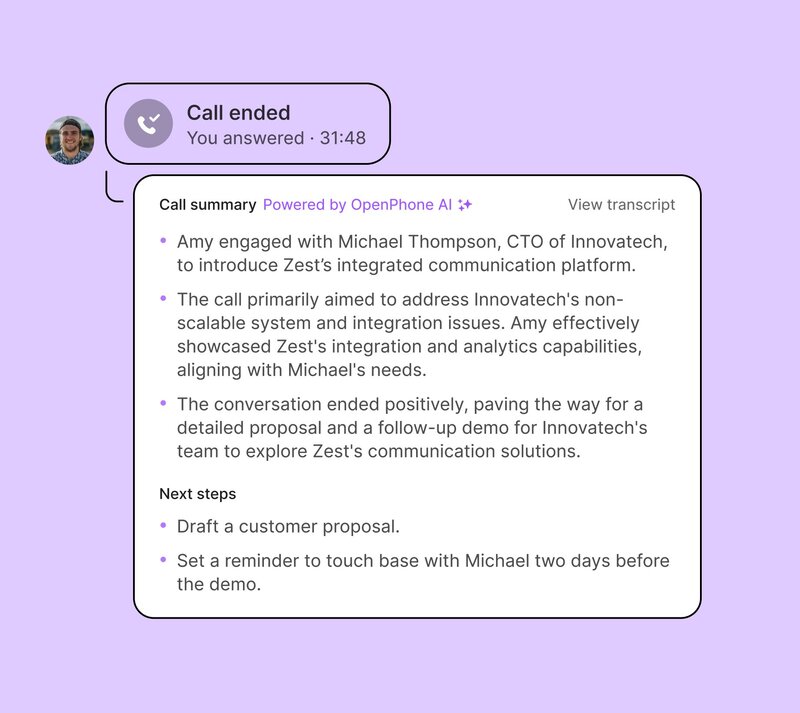
Manual note-taking screams inefficiency. That’s where sales AI call summaries and transcripts come in. Automatically generating call notes saves time and gives your team consistent context across every conversation.
Track analytics
A system with built-in analytics and reporting gives you a clear view of team performance, call volume, and lead progression. You can spot trends, identify bottlenecks, and make smarter decisions about what’s working — and where your process might need a tweak.
Warm transfer calls

Sometimes a rep needs to loop in someone else mid-call to discuss pricing, contracts, or a technical detail outside their lane. Warm transfers let your team share context before handing off the call, keeping the experience seamless and saving customers from having to repeat themselves.
Use advanced call routing
A phone system with customizable call flows lets you control how and when team members are notified of incoming calls. You can set routing rules based on lead type, urgency, or business hours — and even adjust ring durations.
Stay organized with custom properties

Custom properties help your team stay on top of the inbox, manage follow-ups, and pull reports based on lead type or status. For example:
- Use a Date property to log the next scheduled call or appointment
- Add Text properties for notes like integration needs, pain points, or priorities
- Use a URL property for the lead’s website or key links
- Apply Multi-select tags for high-level organization, like “Customer,” “Prospect,” “VIP,” or “Investor”
Sync everything to your CRM
Connect everything, including your phone system, to your CRM software. Automatically sync contacts, track calls and texts, generate analytics, and keep your pipeline up to date with no extra admin work. That means less time on busywork and more time closing deals.
Common mistakes small teams make when scaling inbound sales
Even with a solid process in place, small teams can easily fall into a few common traps:
- Poor lead qualification: If reps don’t ask the right questions, they fail to uncover why the lead reached out in the first place — and miss whether there’s a real pain point your product or service can solve.
- Slow response times: Waiting more than 24 hours to follow up often means the lead goes cold or moves on to a competitor.
- Pushing every inquiry into a call: Not every lead needs a meeting. For quick questions, SMS is often faster and more efficient, especially when team resources are limited. Check out some sales text message examples for inspiration.
- Using overly complex tools: Platforms with complicated onboarding or steep learning curves can slow your team down instead of speeding things up.
- Coming across as impersonal: When reps ignore past phone call notes or contact history, follow-ups feel generic and leads lose interest quickly.
Quo: The best tool for perfecting your inbound sales strategy

Quo gives small teams everything they need to run a smart, modern inbound sales process — without juggling a dozen disconnected tools.
Think of it as a mini CRM, with features like:
- Custom contact properties
- Integrations with tools like HubSpot, Salesforce, Zapier, and Slack
- Call recording, automated call summaries, and searchable transcripts
- Smart texting tools like text message templates (snippets) and auto-replies
- Call tags for better lead organization
It’s more than just a phone system. It’s a full inbound sales engine in one place.
Try it free for seven days and see what you’ve been missing.
FAQs
Start by assessing how ready your lead is to make a purchase. Early-stage leads often need more general education; later-stage leads need specific details and social proof like case studies. Ask questions to gauge where they are, and tailor your approach accordingly.
Especially for small teams, an inbound sales process is usually easier. You’re talking to leads who have already shown interest, which means shorter sales cycles and higher conversion rates.
Imagine a lead downloads a how-to guide or whitepaper from your website. A sales rep follows up, references what the lead read, and books a discovery call to dive into their goals.
Inbound brings in warmer, more qualified leads and is often more cost-effective than outbound. But lead volume can be inconsistent, and without a solid follow-up process, good opportunities may slip through the cracks. It works best when paired with the right tools and clear workflows.
Respond quickly, personalize every touchpoint, ask thoughtful questions, keep notes centralized, and offer a clear next step at each stage of the process.