CRM

A mini CRM for your phone system

Manage every contact in one place — with seamless syncing to tools like HubSpot and Salesforce when you need more.
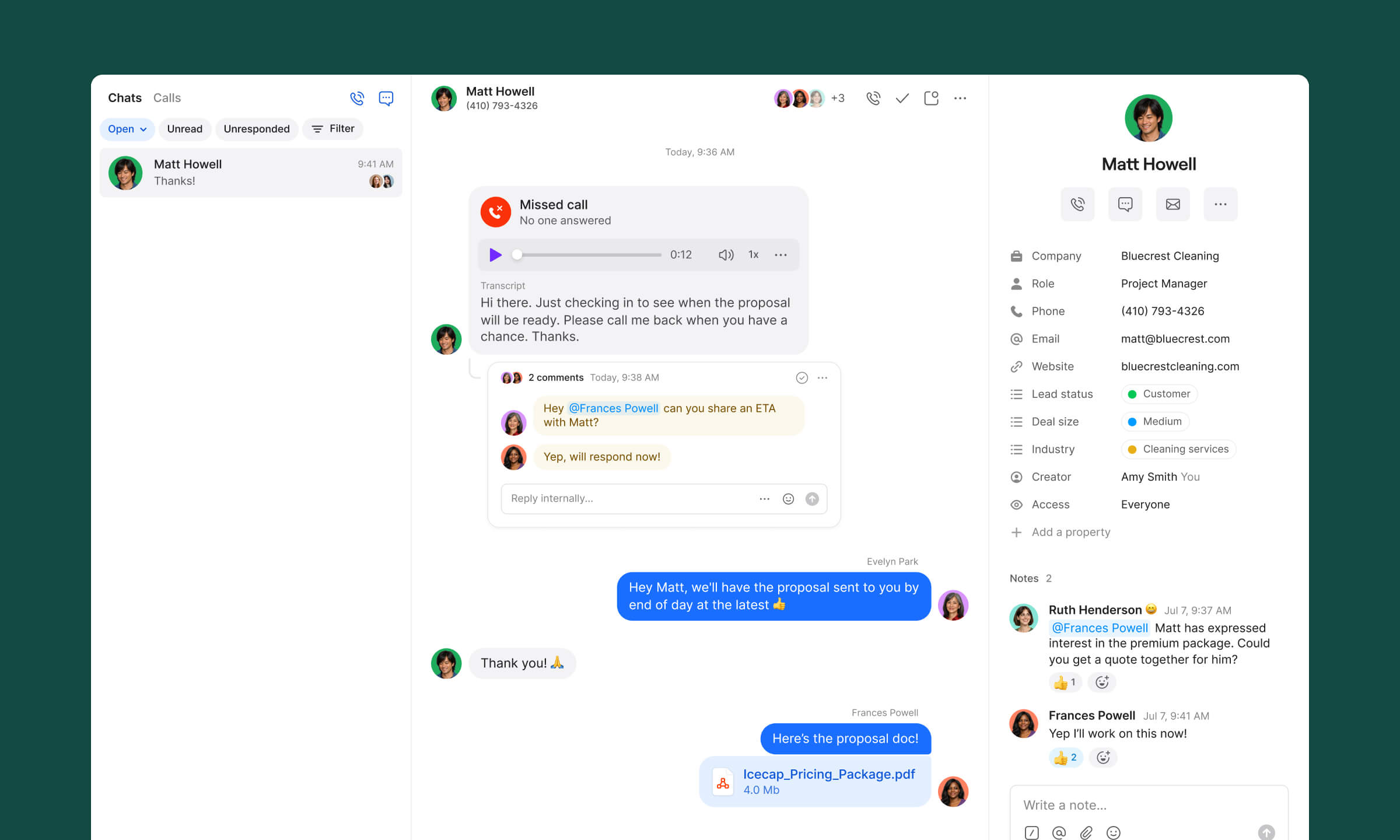
Messaging interface showing a conversation about a proposal between Julia Knight, Mei Lin, and Maggie Sullivan, including a missed call, comments, a proposal PDF file, and contact details for Julia Knight from Bluecrest Cleaning.
Contact management interface showing a file upload area for CSV files and detailed contact info for Angela Campbell, including company, role, phone, email, website, and notes.
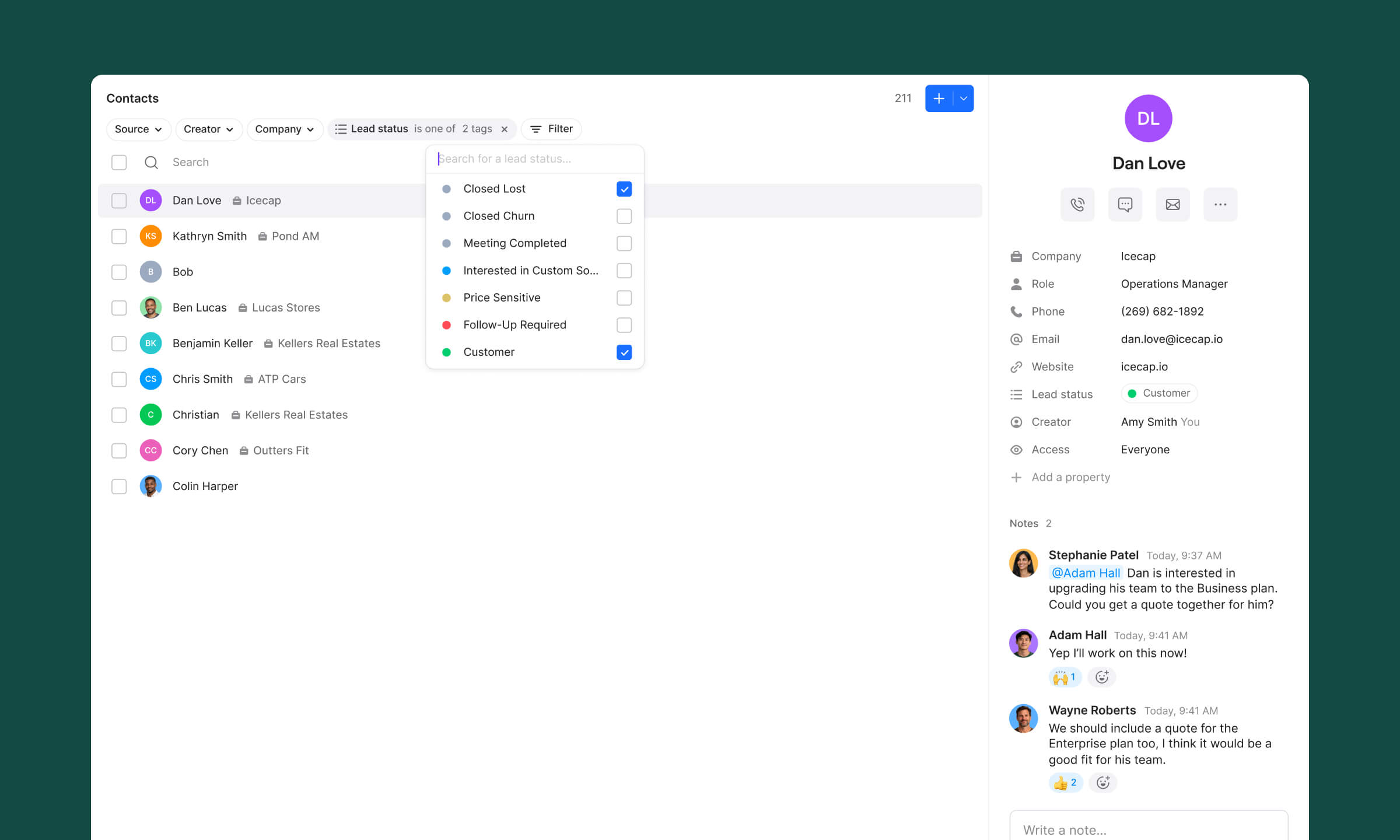
Contact management interface showing a filtered list of contacts with tags for lead status including Closed Lost and Customer, and detailed contact information and notes for Dan Love, Operations Manager at Icecap.
See everything
See every call, text, and detail of each contact so you always have the context to deliver great service.
Integrate your tools
Sync contacts with your CRM or import them from a spreadsheet to keep customer records up to date across your tools.
Collaborate easily
Easily share contacts with your team. No silos, no duplicates, no clunky workflows.
Ready to make a call?
Start your free trial today

When records aren’t connected, teams miss follow-ups and repeat conversations

Stop digging through old notes and emails for context
See every detail tied to a contact alongside the conversation, so you always understand where things stand before reaching out.
Call summaries
Call summary and contact details for Kathryn Smith, Facilities Coordinator at Brightwell Property Group, including phone, email, website, and lead status as prospect with a large deal size in property management.
User interface showing Salesforce and HubSpot logos with the text 'Syncing contacts...' above profile pictures of seven diverse people.
Bring your CRM along for the ride
Sync contacts from HubSpot or Salesforce (or drop in a spreadsheet) to keep everything up to date — and send conversation data like call summaries and transcripts back to your CRM.
CRM integrations
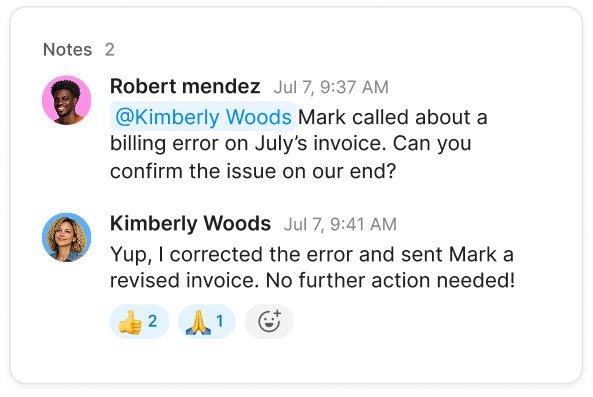
Chat between Diana Reid and Jennifer Cross about correcting a billing error on July’s invoice, including timestamps and reaction emojis.
No more "wait, what happened with this client?"
Whether you’re jumping in mid-thread or tagging a teammate for help, shared contacts mean less backtracking and more action.
Shared contacts
2
Smoother workflows

Quo is phenomenal. Whether we’re communicating with employees, our customers, or our clients, it gives us visibility into all the different lines that we use. It’s a great platform, super convenient, really easy to use, and inexpensive. We love it.

Smiling young man with short dark hair wearing a black shirt on a purple background.
Jason Ovryn
Co-founder & COO @ Carry

All calling features

Conversation history
View a complete, scrollable history of each customer’s interactions, from texts and calls to voicemails and internal notes
Contact notes
Add context to any contact and tag teammates to collaborate behind the scenes
Custom contact properties
Capture the details that matter most to your team
AI-suggested contacts
OpenPhone automatically identifies and suggests new contacts based on recent conversation data
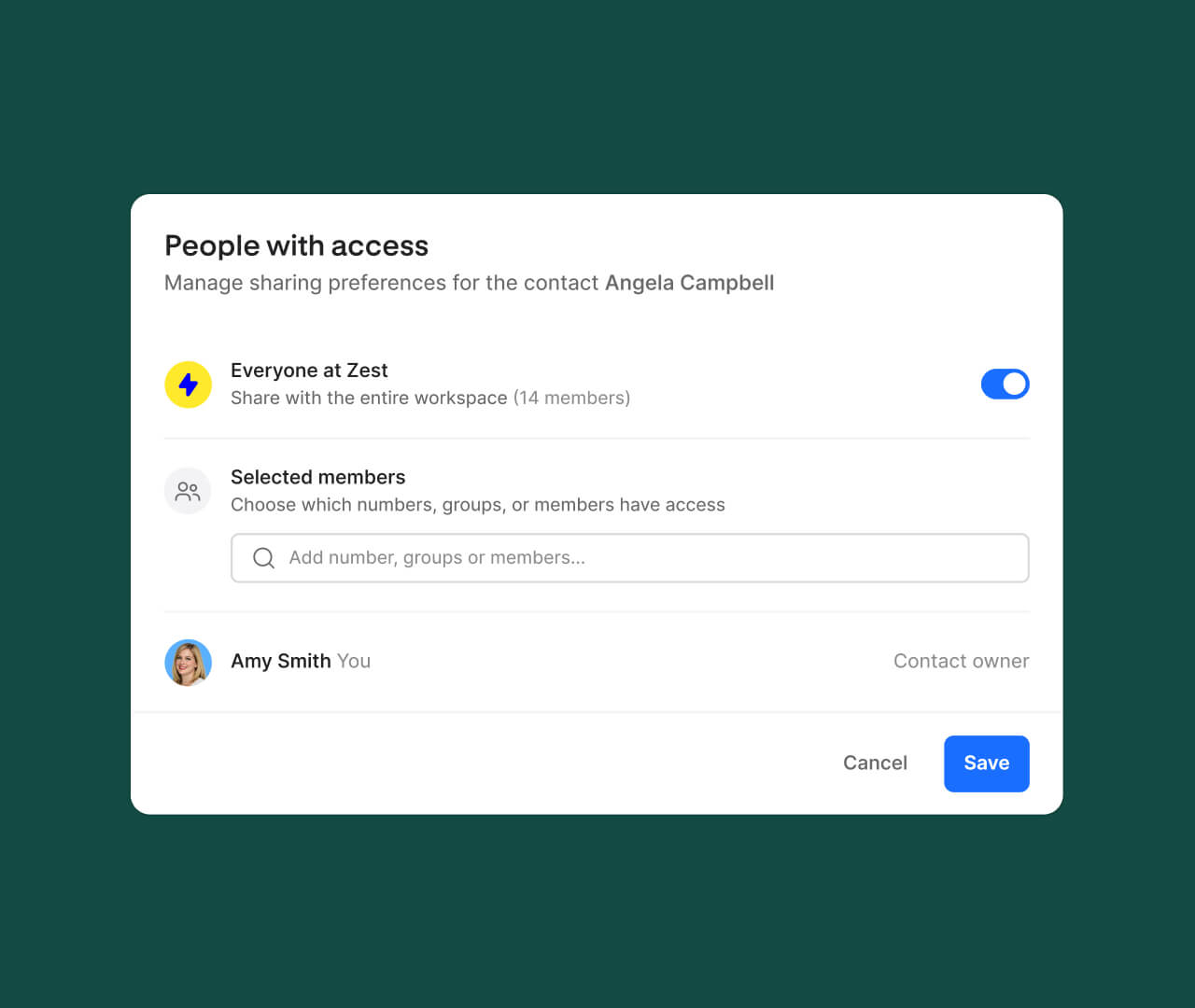
Shared contacts with access controls
Manage which contacts are visible across your team to prevent clutter and confusion
Contact tags
Organize contacts by type, stage, or priority to stay on top of follow-ups and workflows
Smart contact search & filters
Quickly find the right contact using tags, filters, or keywords across notes and message history
Merge duplicate contacts
Automatically detect and clean up duplicate entries to maintain a tidy contact list
CRM contact sync
Automatically sync contact records from tools like HubSpot, Salesforce, and more
Data push to CRM
Send call summaries, transcripts, and conversation data back into your CRM for a complete customer view
CSV import
Bulk upload contacts in seconds from any spreadsheet to get up and running fast
API access
Use our API to programmatically create, update, or retrieve contact data and integrate with your custom workflows
Compare

Ready to switch?
Why teams choose Quo

No training required
Dialpad's enterprise dashboards can be hard to learn and navigate
Always on, 24/7 AI assistance
Dialpad's AI requires expensive upgrades and coaching to use
All-inclusive plans staring at $15 per user
Dialpad's base price jumps to $45+ for a similar level of features
Shared inbox and full-thread visibility for complete context
Dialpad has siloed conversations and admin-heavy workflows. ⁠
Built to help you give a personal touch at scale
With Dialpad you have to dig through call center metrics
Transparent with predictable costs
Dialpad has toll-free fees and per-minute international charges
All-inclusive plans starting at $15/user
RingCentral has custom pricing with add-ons
Easy to get started
RingCentral takes more time to configure and set up
Included Sona AI answers calls 24/7
RingCentral spreads AI features across several expensive tiers
SMS approved fast with Quo
RingCentral's lengthy waits for approvals lose customers
Created to build customer relationships
RingCentral has complex internal collaboration dashboards
Calls, texts, and customer context in one thread
RingCentral spreads conversations across separate apps and dashboards
All-inclusive plans starting at $15/user
Nextiva's entry level plan has no phone service
Unified calls, texts, and easy CRM from day one
Nextiva is $30-36/user just for basic calling and nothing else
Sona for handling first responses is included
Nextiva requires a $40-75/user tier for any AI assistance
Unlimited business texting included
Nextiva has 100-250 SMS per-month caps that lose you customers
Streamlined for simple relationship building
Nextiva has limited features paired with complexity
No hidden fees, transparent pricing
Nextiva has add-on pricing to access to basic features
Starting at $15/user with no minimums
Aircall requires a 3-license minimum purchase for $30-50/license
Unlimited toll-free with Sona AI included
Aircall has hidden fees and $9/user AI add-on
Unlimited texting with no caps
Aircall limits you to 4,000 messages and charges extra for each additional text
Advanced analytics included
Aircall requires a $50/user Professional plan for reporting
All-inclusive plans with no surprises so you can scale
Aircall has a complex per-license model that requires purchasing unnecessary licenses so they can scale
Shared inbox and full customer history for every teammate
Aircall’s call-centric workflows make it harder to keep texts, voicemails, and notes in one thread
Complete platform starting at $15/user
Google Voice has a $50 Google Workspace subscription required
Shared numbers and team inboxes
Google Voice allows only single user lines
24/7, always-on responses from Sona
Google Voice just has extremely basic voicemail and transcription
CRM integrations and phone menus built in
Google Voice just has consumer calling features
Unlimited texting without restrictions
Google Voice has limits and restrictions
Make calls globally on day one
Google Voice has a US-only limitation on their Starter plan
Unlimited calling starting at $15/user
Zoom's entry plan charges for every outbound minute
Sona handles routine calls and texts 24/7
Zoom Phone has basic transcription focused solely on meetings
All-inclusive plans starting at $15/user
Zoom requires $18-22/user bundles for the basics
Designed for customer conversations
Zoom Phone was created as a way to make a little extra money from video conferencing
Real CRM and business integrations
Zoom's has a limited phone system ecosystem
Calls, texts, customer info unified
On Zoom Phone they are scattered across meeting and phone apps
Ready to make a call?
Start your free trial today

Ready to get started? Explore features, learn more, or choose from thousands of numbers.