

How Caddy Moving tripled revenue per rep with Quo


by eliminating admin work and keeping reps focused on selling

down from 10 minutes — reaching customers before competitors do

scaling from 3,400 to 36,000+ calls a month
Caddy Moving is an on-demand moving labor company based in Austin, Texas. Customers bring their own vehicle and Caddy sends background-checked, insured movers to handle the heavy lifting.
Picture a moving company in your head. You probably see a truck with a big logo on it that says something like “Three Big Guys and a Truck” or “Sullivan’s Movers.” But if that’s what you pictured for Caddy Moving, you’d be wrong.
Caddy takes an approach that might be best described as BYOT, or bring your own truck. You rent or provide the vehicle (a U-Haul, a PODS, a nondescript white van, etc), and Caddy sends vetted, insured movers to handle all the heavy lifting for you. This asset-light approach has worked well for them on a remarkable scale: each year, they help 15,000+ families across 90+ locations. And they’ve earned a 4.8-star rating in the process of doing so.
How did they achieve this success, and how does Quo help them do it?

If you’re a moving company, you have to assume two things when a potential customer reaches out:
Considering this, Caddy initially went with a self-serve model, assuming the best approach was to give customers an immediate quote with no lag time and schedule their move with zero human interaction, completely eliminating wait time. But potential customers didn't like that and were abandoning their carts at a much higher rate than anticipated. It turns out that with something as big and as personal as moving, many customers wanted to talk to a representative before making a decision.
So Caddy changed its approach, switching to a more human-focused booking method: customers shared their move information, and a rep contacted them to tell them their options and provide a quote. But reaching out to these new leads was a mad, manual scramble. Leads were landing in their CRM; the reps had to check the CRM to see that they were coming in, pull up all the details, read through them, and then dial the person. This worked better than self-serve, but reps were spending more time on admin tasks than they were on selling, and Caddy was often losing to competitors who got there first.
A human-first approach only pays off to the degree that humans are able to do human work, instead of busy work. In an industry where a rep has barely a minute or two to earn a stranger’s trust, every minute lost to admin is a minute of lost sales.

CEO & Co-founder
Caddy’s answer to this was to automate every step that wasn’t part of the conversation, freeing up reps to spend their time talking to and closing customers, instead of clicking around on their computer screens. They brought in a few tools to handle different parts of this administrative busywork: Airtable to act as their CRM, an AI model to draft an initial reply based on information the lead shared, Zapier to automate passing information between tools, and Quo as the layer that sits underneath it all, managing every phone call and text.
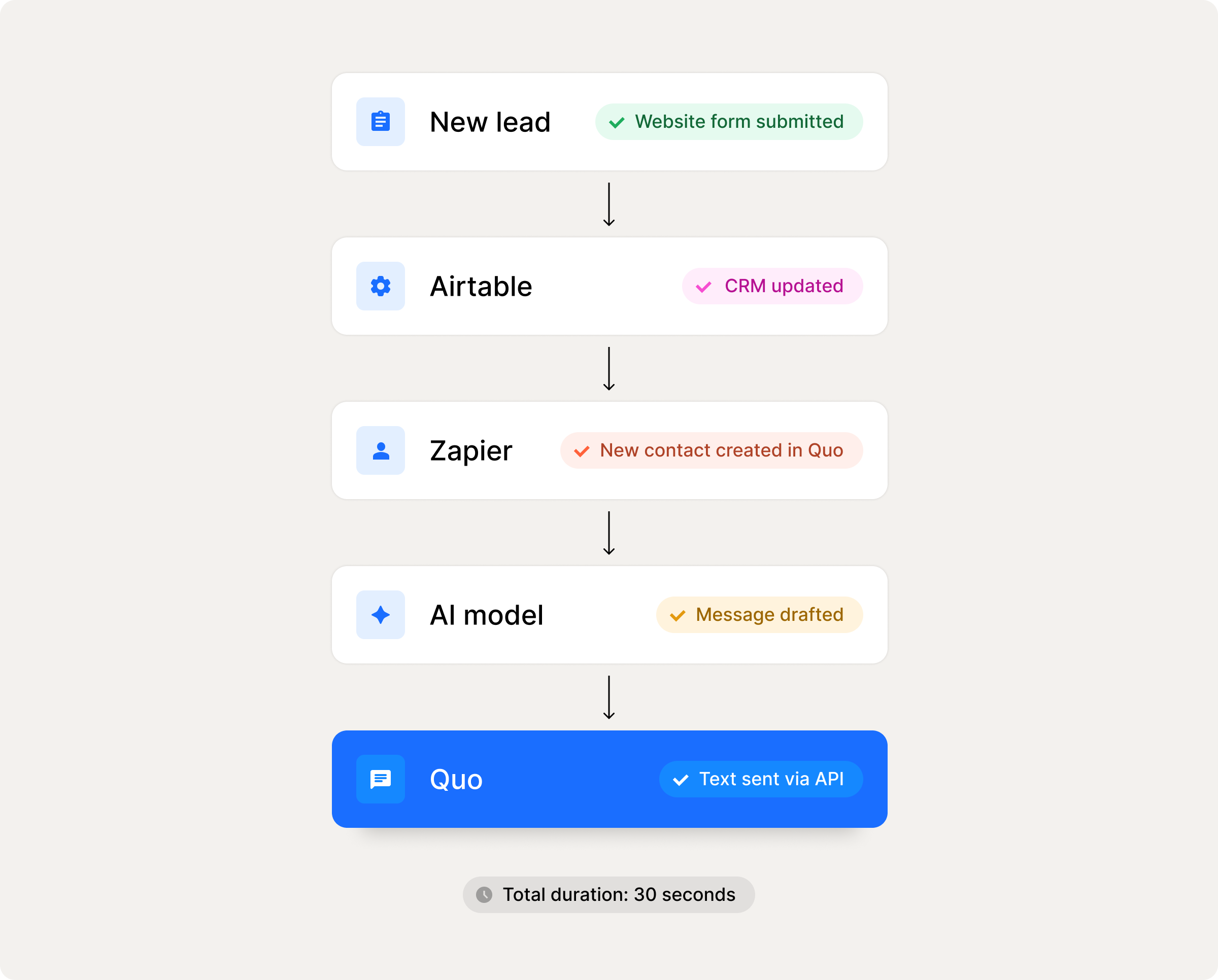
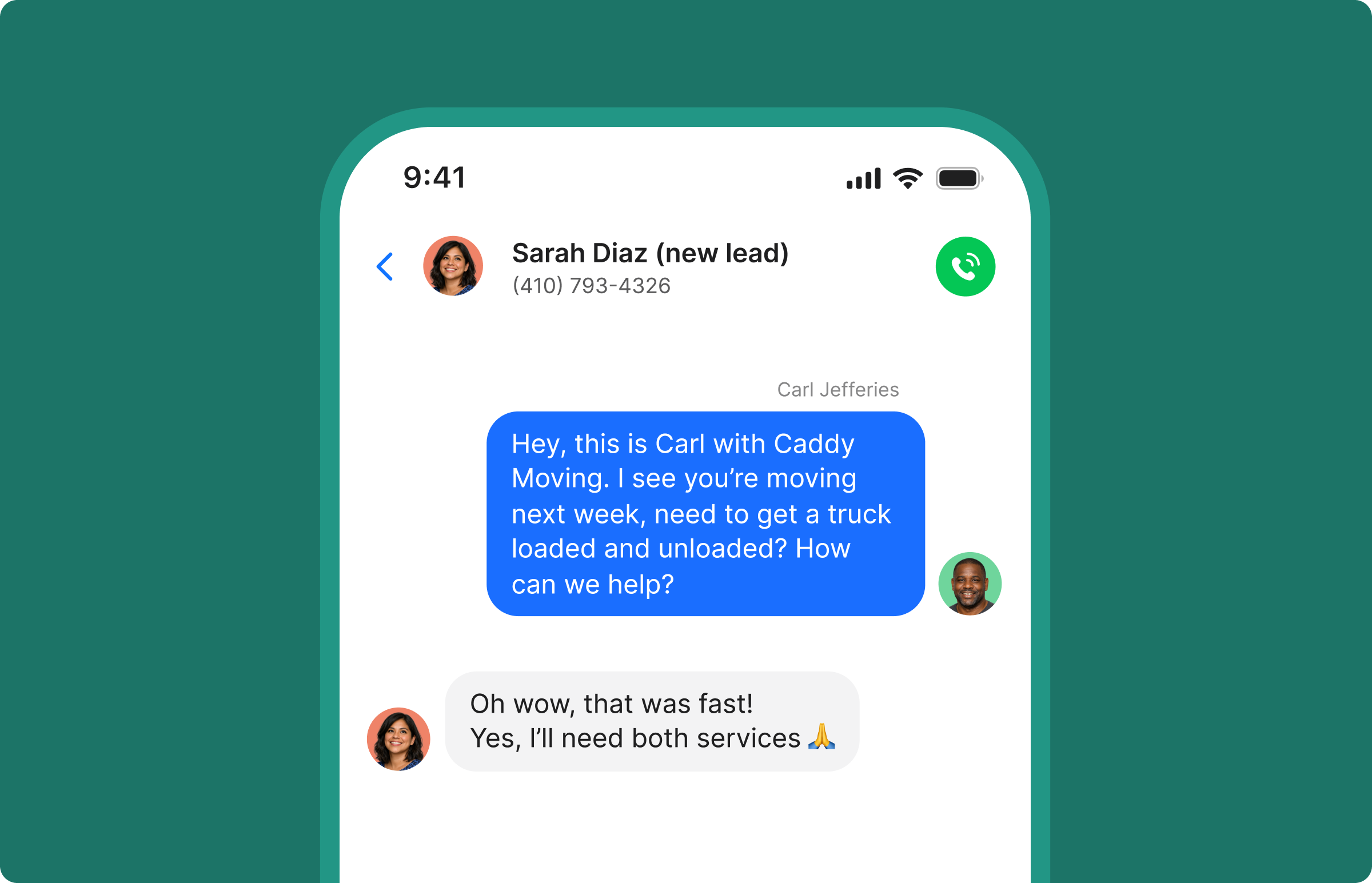
Here’s how their flow looks in practice: A lead arrives in Airtable, and Zapier immediately creates and tags this new contact as a “lead” in Quo (should they book a move, their tag will change to “customer”). The AI model drafts an initial message from the lead’s details, and the Quo API delivers it as a personalized text message that reads as if a person wrote it:
“Hey, this is Carl with Caddy Moving. I see you’re moving next week. Want to get a truck loaded and unloaded? How can we help?”
All of this takes right around 30 seconds. That’s down from the 10 minutes or so that it used to take for reps to find a lead and reach out by hand. That completely changes the math, allowing reps to reach customers while they’re still deciding, not after they’ve called the next company on their list. Reps can then have better phone calls with warmer leads, making it easier to close them.
How a new lead flows through Caddy’s stack:
When their calls are done, reps can use one-click AI follow-ups that work in much the same way, with the AI model writing messages based on the text conversation in Quo and the lead's details in Airtable. When a customer replies, the thread lands in a shared inbox that any rep can pick up, with the full history and previous call summaries right in front of them in Quo. This work used to tie up two reps writing 400+ follow-up texts per day by hand, but now they can be on the phones doing much higher-impact sales work.
Though other tools generate the leads and words, Quo turns them into real two-way conversations. “Take Quo out,” Zach says, “and the organization for all our conversations is gone. Everything breaks.”
“Take Quo out and the organization for all our conversations is gone. Everything breaks.”
For a company that won by betting on human connection, Quo is providing the right kind of automation that strengthens that connection rather than diluting it. And since adding new numbers and teammates to Quo takes minutes, they can rapidly scale up as Caddy enters new markets.
With admin busywork automated away, Caddy’s reps spend their time where it counts: on conversations with leads and customers, and every number has moved sharply up during their time on Quo:
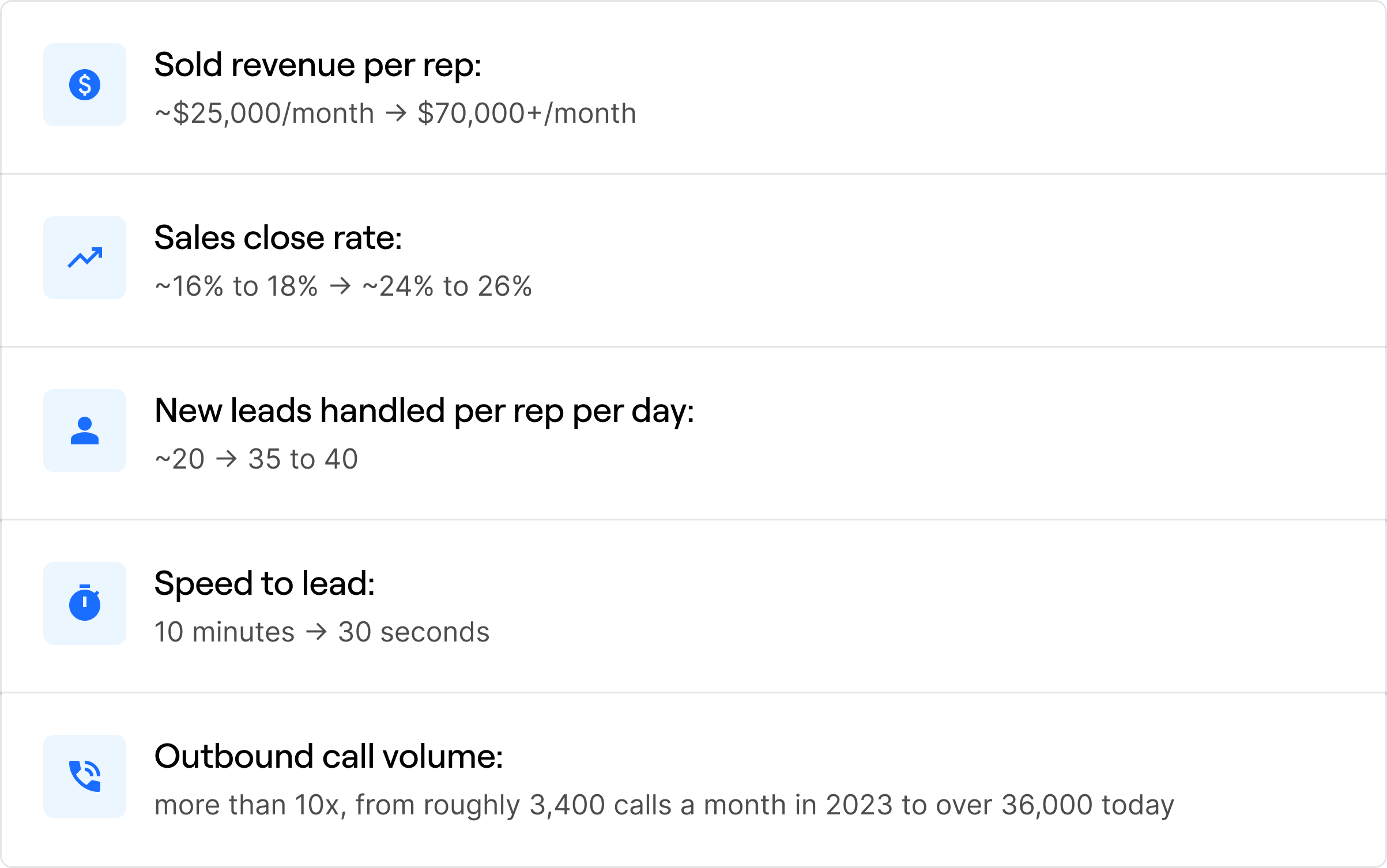
The team has grown in tandem with outbound call volume, from a couple of dedicated sales reps to a dozen, with each placing over 100 calls on a busy day (not every call is with a new lead). More calls with a higher close rate result in significantly more booked moves without requiring a huge jump in headcount. As Caddy keeps growing, that’s what they want to build on: not just hiring more people as they grow, but freeing up those people to do the kind of deeply important work that software can’t do: winning a lead’s trust and turning them into a customer.
.png)
Head of Sales




.avif)

.avif)
.svg)