Ask most small business owners what a good first response time looks like, and they’ll say something like “same day.” It’s a reasonable answer — but it’s not the benchmark that actually wins jobs.
Responding in 5 minutes or less leads to a 32% close rate, according to a 2025 survey of 939 B2B companies. Those who made customers wait up to 24 hours saw their conversion rates cut in half, closing just 15%.
Improving your speed to lead doesn’t require investing in enterprise software or hiring more team members. You just need to know what your actual numbers look like and fix the leaks in your system. Here’s how to measure your lead response time and win more jobs for your business.
What is lead response time?
Lead response time is the gap between a lead reaching out and the first reply from your business. It measures how long a customer waits for an answer after sending a text, filling out a web form, or leaving a voicemail.
Many businesses use auto-reply texts or basic website chatbots to send a real-time response. But these mostly buy you time and don’t bring leads closer to booking. Only when someone on your sales team calls or texts back does a meaningful conversation start.
When measuring your own response time, decide whether to count the automated response or the human callback as a reply so you’re working from the right baseline.
Why lead response time matters for SMB owners
How fast you handle inbound leads determines whether you win jobs or lose them to competitors. Here’s why lead response time matters so much for service businesses.
- Speed is a competitive advantage. A 2025 study of 1,300+ law firms found that only 25% respond within 5 minutes, and the median response time is 13 minutes. Having a system that improves your first response time can help you win more jobs and gain a competitive edge.
- Every lead has a cost. It takes time and money to get a prospect to reach out to you. According to the 2026 Home Services Marketing Benchmarks, the average cost per lead for home services ranges from $100 to $250. Delaying or skipping a response means paying for a lead you never had a shot at booking.
- The revenue math compounds quickly. Even a small number of missed leads can negatively impact your bottom line. To put it in numbers, missing just 10 inquiries a week at a 30% close rate and a $500 average job value adds up to $78,000 a year in lost revenue. Larger jobs or higher call volumes make that number worse.
How to calculate lead response time
To figure out your lead response time, subtract the time a lead first contacted you from the time your team replied. Here’s the formula:
Lead response time = time of lead’s initial contact − time of first reply
For example, if a roofing business tracks 5 incoming web leads and local service inquiries on a Monday morning, the individual times might look like this:
- Website form lead: Sent an inquiry at 9:00 a.m. and a sales rep got back to them within 2 minutes. Response time: 2 minutes.
- Facebook DM: Messaged your Facebook page at 10:00 a.m. and received a response from the manager at 10:05 a.m.. Response time: 5 minutes.
- Google Local lead: Submitted a form at 11:00 a.m.and received a text from a dispatcher at 11:08 a.m.. Response time: 8 minutes.
- Voicemail: Left a message at 1:00 p.m. and was contacted by a rep at 1:15 p.m.. Response time: 15 minutes.
- Estimate email: Emailed a quote request at 2:00 p.m. and heard back at 8:00 p.m. because the team was tied up on a job site. Response time: 360 minutes.
To calculate the average lead response time across this group, add the total amount of time spent waiting and divide by 5:
2 + 5 + 8 + 15 + 360 = 390 minutes
390 ÷ 5 = 78 minutes average lead response time
Three lead response metrics you must track
Knowing the average tells you where your team stands overall, but it doesn’t show you how well you’re securing new business. To optimize your response speed and see where you’re losing potential jobs to faster competitors, you’ll want to look at these three metrics:
- Average: This gives you a quick snapshot of your team’s current response speed. However, it can easily be thrown off by a single bad afternoon. For instance, in our example scenario, one 6-hour delay pushed the average up to 78 minutes despite four responses coming in under 15 minutes.
- Median: This only looks at the middle number on your list. In our example, that’s 8 minutes. Even a 360-minute delay at the end of the list doesn’t change where that middle number sits.
- P90: This highlights your worst delays by focusing on the slowest 10% of your responses. In our roofing scenario, that’s the 6-hour email delay. Those are the numbers worth fixing before they cost you more jobs.
What’s a good lead response time? Benchmarks by channel
Answering within 5 minutes is the standard when a buyer wants to talk to a representative right away. However, most businesses take much longer than 5 minutes to respond to new inquiries, creating a major advantage for companies that respond quickly. The chart below shows how 939 B2B companies differ across response times:

Just because an industry average is slow doesn’t mean you’ll win out against your competitors by following the status quo. Customer expectations change completely, depending on how they reach out to your business, as this second chart breaks down by lead source:

Matching your response speed to the channel a prospect used gives you a better chance at winning the job. Here are a few tips for each touchpoint:
- Phone: Pick up live or use an automated answering service to return the call within 5 minutes.
- Text: A 5–15-minute response time is ideal, according to a 2024 Consumer Texting Report. The problem with text leads is that they ghost faster than any other channel. A dedicated lead follow-up process can bring them back. Use these pre-saved sales text message examples to help your team reply fast and keep the conversation going.
- Web Form: Aim for under 5 minutes on high-intent pages, like a custom quote request or contact form. Even though these alerts hit your email inbox, they require immediate action. For low-intent actions, like a newsletter signup, replying within the same business day is fine.
- Email: Getting back to a direct message sent to your general business email is best handled in under 1 hour, though anywhere between 1 and 4 hours is acceptable for non-urgent questions.
Don’t limit yourself to just one way of responding. If a hot lead comes through a website form, try calling or texting them right away instead of sending an email later. That catches them while your business is still top of mind and helps you start the conversation before they call the next contractor on Google.
Where lead response time breaks down and how to fix it
Which of these four situations describes your business right now? The answer tells you where to focus: Slow response times are rarely a motivation problem. They’re a setup problem.
1. The owner-as-bottleneck problem
You handle every incoming lead yourself while trying to run the rest of the business. When you’re on a job site or meeting with a client, new inquiries go unanswered because your hands are full and nobody else has access to respond.
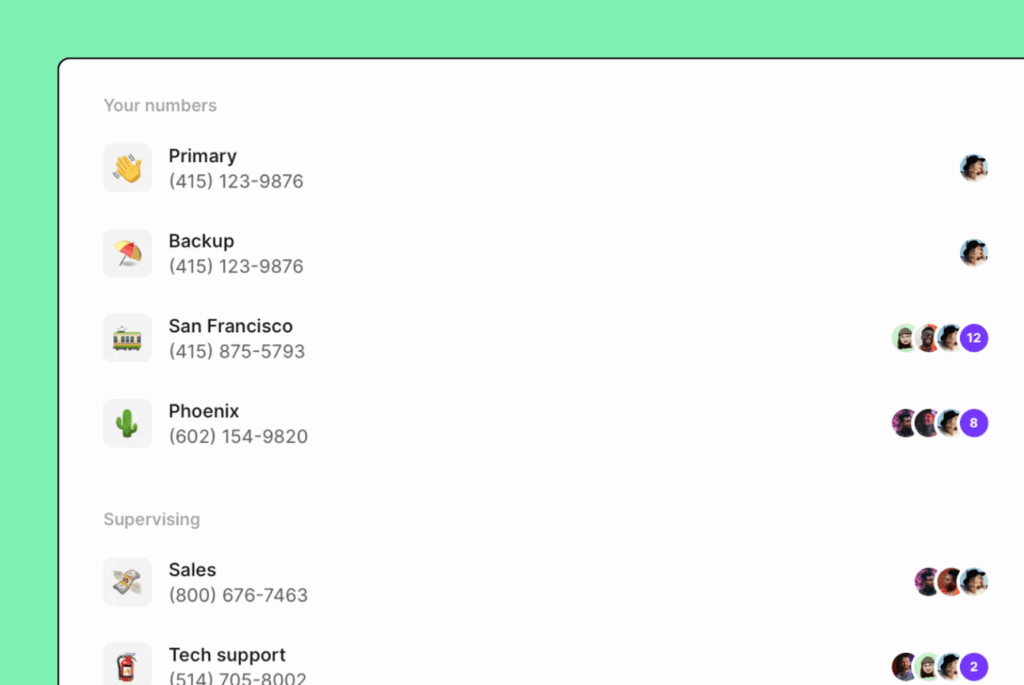
Address this by changing the way your business handles incoming messages. Give your team shared access to your business number so anyone can see and reply to new leads. Set up text message templates, or snippet, so your team can respond quickly without having to type a fresh message every time.
2. The after-hours gap
A significant portion of your leads may come in late at night or over the weekend when the office is closed. If your only after-hours system is letting a call go to voicemail, you’re losing leads before your next workday even starts.

Fix this by putting automation in place to cover your calls and texts after hours. Use an AI voice agent to handle late-night phone calls and set up a simple SMS auto-reply for texts so every lead gets an immediate response, regardless of when they reach out.
3. The visibility problem
Your leads and customer data live in separate tools that don’t talk to each other. Calls are logged in one place, your CRM sits in another, and voicemails end up on someone’s personal cell phone. When a new lead comes in, nobody has the full picture. Your team ends up either contacting the same person twice or missing the follow-up completely.

Integrate your tools so customer details update everywhere at once. Connect your phone system to your CRM, route website form submissions straight to a shared inbox, and send voicemail transcripts to wherever your team works.
4. The poor-routing problem
Having a team doesn’t automatically mean calls are answered. If calls ring everyone at once, nobody feels responsible for picking up. If they go straight to your personal cell, they stop there. And if there’s no backup when no one answers, leads hit voicemail and go cold.

Design a clear call flow so incoming calls get to the right place. Use ring groups to route a call to an available office worker first, then set up a rollover path that transfers the caller to an AI voice agent if the front desk is tied up.
How to track lead response time
The best way to track your lead response time depends on how many leads your business handles each month.
- Any volume. Ask AI. With Quo’s ChatGPT and Claude connectors, you can ask questions about lead response time. Make sure you’ve connected Quo to Claude using the Customize button. Then, try this prompt: Can you calculate lead response time based on this number [inbound sales number] using the Quo Claude connector? You’ll get metrics that look like this:

- Under 50 leads per month. A spreadsheet works fine for lead tracking at this volume. Log when the lead came in, when you replied, which channel they used, and whether you won the job. Review it weekly — median and your slowest 10% matter more than the average.
- 50+ leads per month. A CRM like HubSpot or Salesforce automatically captures timestamps and sends real-time notifications for new leads. The catch is that your CRM only tracks what’s connected to it. Calls handled outside the software, texts from personal phones, and form submissions sitting in an email inbox won’t show up without integrations.
Use Quo to close the lead response time gap

Slow lead response times have nothing to do with effort. The problem is that most setups aren’t built to handle new messages the moment they come in. When your team is on a job site or busy with a client, leads sit unanswered because no system is catching them. If you want to grow your inbound sales motion, you have to stop relying on memory and put a system in place that works for you.
Quo offers the tools your team needs to improve your sales process and prevent unread messages from getting buried:
- Shared business numbers. Multiple office workers and field technicians can view and answer incoming messages from a single line.
- After-hours coverage. The Sona AI voice agent manages late-night phone calls, handles basic lead qualification, texts booking links, and more. Automated text replies answer website messages so your business never goes silent.
- CRM integrations. Syncing your phone activity with platforms like HubSpot or Salesforce prevents customer details from getting lost or duplicated. See how our sales team uses Quo to keep everything connected in one place.
- Customizable call flows. Automated lead routing guides incoming calls to an available team member instead of burying alerts in a single inbox.
Putting these tools to work is the most reliable way to protect your company’s bottom line and stay ahead of your competitors. For the full tactical playbook on how to put it together, see our guide to speed to lead.
Ready to see Quo in action? Try Quo for free for seven days.
FAQs
The 5-minute rule comes from a widely cited study published by the Harvard Business Review. Business professor Dr. James Oldroyd found that businesses responding within 5 minutes are 21 times more likely to qualify a lead than those that wait just half an hour. Although the research is nearly two decades old, fast response times remain key to lead conversion.
The 10-3-1 rule in sales is a traditional baseline formula that states for every 10 leads you bring in, you can expect 3 qualified leads and 1 closed deal. While it works well for forecasting your weekly income, it falls apart if prospects ghost you before you even get a chance to reply. A fast lead response time is what protects your pipeline and ensures you actually turn those raw inquiries into closed deals.
Lead response time is a top-of-funnel metric that measures the gap between a lead’s first contact and your team’s first reply. Most businesses track it as a simple average, but looking at your median response time and your worst 10%, or P90, gives a more reliable picture of where you’re losing deals.
A realistic lead response time for a one-person shop is under 15 minutes during business hours. This window gives you a manageable target while you’re working on a job site or meeting with a client, but it only works if you set up an instant auto-reply. A quick response buys you time until you can follow up personally, as it’s often not possible to respond within 5 minutes when your hands are full.