Your support team is doing its best, but tickets keep piling up. Customers are waiting longer for responses, and you see it reflected in your reviews. Reps handle situations differently, and the inconsistency is starting to show.
A solid customer service strategy can help conquer the chaos. With a structured plan in place, your team has a roadmap for delivering consistent, five-star customer service. This is the kind of service that builds lasting relationships and drives business growth.
This guide covers how to create a customer service strategy, along with tips for putting it into practice. You’ll also learn about must-have tools that can support your strategy in the long run.
Why should you have a customer service strategy?
According to Salesforce, 82% of service professionals say customer expectations have increased. But without a strategy, your team has no clear way to meet them. Instead, they’re left guessing how to handle each situation.
This leads to inconsistent service, wasted time on the wrong priorities, and no way to measure if you’re improving. A clear strategy gives your team direction. It also helps you deliver consistent service while tracking what’s actually working.
💡Further Reading: Customer service management strategy: 6 essentials to get you started
How to build a customer service strategy in 9 steps
Here are nine steps to create a solid strategy for customer service:
1. Research your customers
Effective customer research helps you understand who you’re serving and what they want from your business. This way, you’ll know where to focus your efforts instead of guessing what customers need.
Follow these steps to get a clear view of your customers:
- Understand who they are. Go through records of customer conversations in your CRM, email, and social media platforms. Look for common patterns in demographics, industry, and purchase behaviors.
- Learn their communication preferences. Pay attention to which channels customers use when they contact you if you offer multichannel support. This tells you how best to communicate with them. You can also look through reviews to see if customers are asking for a specific channel you don’t offer yet.
- Identify their pain points. Ask your frontline team about customers’ most common questions and complaints. You can also review your call recordings and transcripts to better understand what your customers need and how you can help them.

2. Map your customer journey

A customer journey map is a visual tool that shows every step a customer takes from their first interaction with your service to their las . It shows all potential touchpoints so you can anticipate where and when they’ll need the most help. The map can also help you understand which channels to use, how to train your team, and where to invest your resources.
Here’s how to visualize the customer journey:
- Identify key stages and touchpoints. Map out the stages where customers interact with you. These may include pre-purchase, onboarding, purchase, ongoing support, and renewal. Note which channels customers use throughout this journey, like phone or text. Walk through the experience yourself to see it from their perspective.
- Spot pain points and friction. Go over recent support tickets to find common pain points or drop-off points. You can also interview a randomized group of customers to find out what confuses or frustrates them.
3. Define clear objectives and KPIs
Clear key performance indicators, or KPIs, keep your team aligned and give you measurable data to guide your decisions. Follow these steps to set goals that help you improve customer satisfaction:
- Start with what your customers want. Use your research and journey map to define one or two SMART goals that directly improve key pain points. For example, if customers are frustrated with transfers and escalations, set a goal to increase first call resolution by 14% in six months.
- Choose three to five KPIs that tie directly to those goals. Communicate these clearly to your team, and implement specific steps for improvement. For the example above, you might choose resolution rate as your main metric. Other helpful metrics include customer satisfaction score and customer retention.
4. Choose your support channels
Review your research from step one to determine the channels where your customers spend the most time. Also note which channels they use most often to contact you. Choose one or two primary channels to start with — like phone and email — and focus on providing great service there before adding more.
Set realistic response time goals for each channel based on team size and capacity. For example, responding to emails in under four hours or answering calls within the first 20 seconds.
5. Integrate support tools so your team has complete customer context
Even the best reps can’t pay attention to everything at once. The right tech can give them the visibility they need to keep up with customer demand. To make sure they don’t miss key insights:
- Audit the tech you currently use. Are your tools talking to each other or forcing reps to toggle between different systems?
- Use integrations to unify customer data. Your team needs to see all customer interactions in one place. This way, they can resolve issues faster without having to ask customers to repeat themselves.
Tools like Quo make this possible by integrating with CRMs like Salesforce, HubSpot, and Jobber. You can also connect to over 8,000 other tools using Zapier or Make to give your team easy access to all customer information in one place. If you use a tool that isn’t on the list, the Quo API is available for custom integrations.
Here’s what messages from Quo look like logged inside the HubSpot integration:

6. Document your service standards
Having clear standards helps reps provide the consistent experience that 69% of customers expect. Put these standards in a customer service training manual to teach new reps how to offer exceptional customer service every time.
Here’s what to include:
- Brand voice and tone for customer interactions to create a unified image
- Escalation protocols that detail when and how to involve other team members or senior reps
- Service-level expectations from Step #3, such as resolution goals, so everyone knows what to aim for
- Do’s and don’ts for guiding conversations with customers. These could be things like active listening, clear language, and personalized support
- Response templates to answer common questions about appointments, refunds, and services offered
With Quo’s snippets feature, you can create templates that help reps provide quick responses to routine questions via text. Reps can reply with just a few clicks instead of typing the same answers over and over.

7. Develop your team’s customer support skills
Well-trained reps provide better, more consistent support. This means fewer mistakes, happier customers, and less customer service burnout. Plus, when your team is equipped to handle most issues independently, they resolve problems faster and escalate less often. This frees up senior reps to focus on complex cases that need extra attention.
Also, this investment in training is worth it for your bottom line. Salesforce reports 94% of customers say they’re more likely to make repeat purchases when they receive good service.
Here’s how to start with customer service coaching:
- Train your existing team on your training manual from step six
- Include the manual in onboarding materials for every new rep
- Review call recordings and support tickets to show examples of good — and poor — service
- Track progress with a customer service scorecard so you can review reps based on concrete criteria and help them improve
💡Pro tip: Use Quo’s internal threads to support training with instant, in-context feedback on customer interactions. Threads let you tag reps and provide tips or offer help in the background while they’re helping customers.

8. Establish a feedback loop to track performance and improve your strategy
Create real-time alerts to track customer feedback and spot potential problems. You can connect internal channels like Slack to accounts like Trustpilot to notify reps of new reviews and mentions as they come in. This way, someone can jump in to help promptly if needed.
Sunny Tripathi, Sr. Support Operations Manager at Quo, uses this approach to ensure customers get the best possible support. “If a high-value customer shares a bad CSAT, our customer success manager and most senior team members will get looped in to resolve their issues,” he says.
Make sure reps close the loop with customers. Follow up to let them know you heard their feedback and what you’re doing about it. Showing people you take their problems seriously builds trust and improves customer relationships.
9. Prepare for higher support volume
As you get more customers, start offering new services, or expand your team, remember that your support strategy needs to grow, too.
It’s best to plan for scale while your team is still small so you don’t find yourself overwhelmed and scrambling to implement changes later on. Here are a few ways to set yourself up for success:
- Create templates and automations for repetitive tasks. When you automate customer service, your team can respond faster and stay consistent as ticket volume increases.
- Avoid workarounds that only small teams can use. Telling reps to “just ask Bob” every time they need help will create a huge bottleneck as you grow. Instead, get your team in the habit of referring to documentation and using proper tools to streamline their workflows.
- Choose tools that grow with you. Make sure you can easily add new features and members so scaling is fast and intuitive.
💡Further reading: How to build a scalable customer service team structure
5 Ways to put your strategy into action
Now you’re ready to apply your strategy to customer interaction. Follow these five steps to get started:
1. Implement artificial intelligence for 24/7 support
Your customer research and journey mapping may reveal that a lot of customers contact support outside business hours. Setting up an AI voice agent or online chatbots can ensure these customers get help even when reps aren’t available.
For example, Quo’s AI voice agent, Sona, can answer calls 24/7 to:
- Respond to frequently asked questions
- Take messages
- Capture leads
- Transfer calls to reps when needed
Say a customer calls after hours to ask about service pricing. Sona can provide an answer from your knowledge base so they don’t have to wait until the next day. Having Sona handle these common questions lowers call volume and lets reps focus on more complex issues.

2. Offer omnichannel support
Your research helped you find the channels where customers already spend time. When you integrate your tools, reps have full context into every conversation. This lets you resolve issues faster and offer excellent customer service across channels.
For example, say customers can contact you through phone, email, text, and WhatsApp. You can integrate them all with your CRM so reps can see, manage, and reply to messages from one dashboard.
Quo’s CRM integrations automatically sync data like calls and messages to platforms like HubSpot or Salesforce. This allows reps to see contact details and review interaction histories without leaving the platform. They can also set up workflows to automatically log activities like creating new contacts from calls.
3. Create self-service support options
Your feedback loop reveals which questions come up the most. Use these insights to create self-service resources that let customers find answers on their own. Resources like FAQs, knowledge bases, or video tutorials provide instant answers — without adding to your team’s ticket volume.
For example, instead of sending every question about cancellations to a rep, you could add a policy page to your website. You can also use conversational AI to answer common questions 24/7 without tying up your team.

💡Further reading: AI for customer service
4. Personalize interactions to boost customer loyalty
With your tools integrated, you can see every interaction detail at a glance. This includes past purchases, previous issues, and preferences. Use this information to personalize your service. This will help you build rapport and retain your customers. Sixty-five percent of people stay loyal to companies that offer a more personalized customer experience.
Here’s how:
- Address customers by name and reference past conversations. This builds trust and shows you remember them — not just their ticket number.
- Anticipate needs based on their history. If a customer had an issue with billing last month, proactively ask if everything is running smoothly now.
- Follow up on past issues. Check in to make sure problems are fully resolved and the customer is satisfied.

5. Stay one step ahead with proactive customer service
Did you know 56% of customers rarely complain about negative experiences before switching to a competitor? This makes monitoring sentiment crucial to your customer service strategy. Use what you learn from your journey map and feedback to find where customers usually get stuck. Apply those insights to anticipate customers’ needs and offer helpful solutions.
These may include:
- Sending appointment reminders so customers never miss a service
- Following up after service to ensure customer satisfaction
- Notifying customers of potential issues before they escalate
- Checking in when activity drops to find out why a customer stopped engaging
Consider the example of missed appointments. If most people don’t book again, touch base to find out why. Were they dissatisfied with the initial service? Offer to make it right. Did they simply forget? Set up automated follow-up texts so they always have a reminder.
Power your customer service strategy with Quo
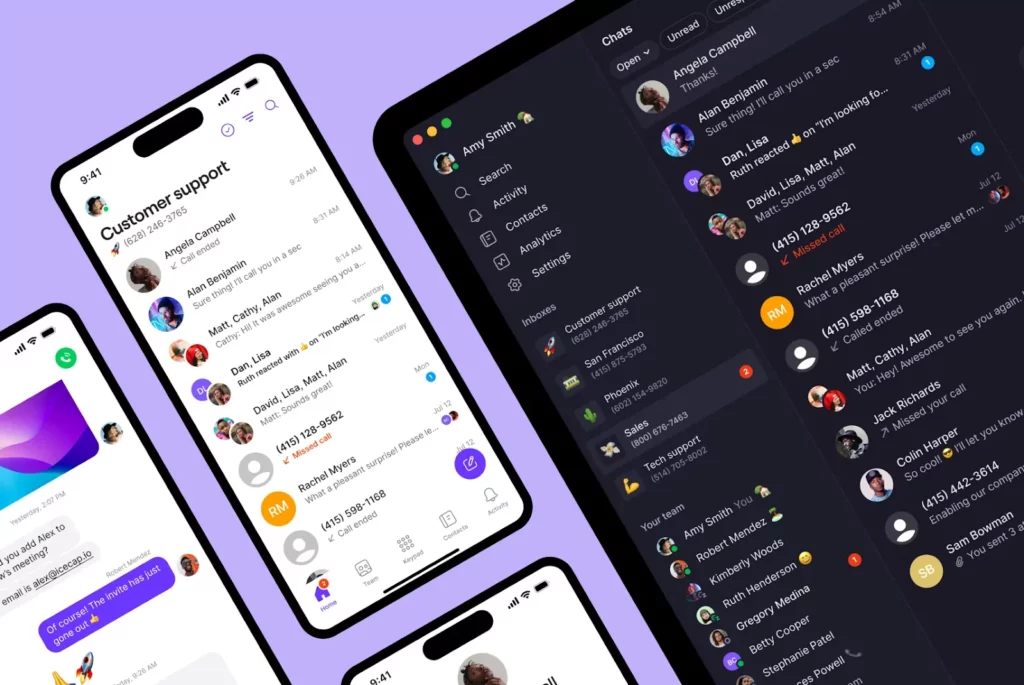
A structured strategy for customer service gives reps the tools and insights they need to meet customers’ expectations. Each customer gets fast, high-quality service — which builds loyalty and drives growth.
Quo helps your team offer the best customer service with features like:
- CRM integrations to help personalize service and give reps complete customer context across all interactions
- Snippets so reps can quickly send replies to common questions
- Internal threads to give reps real-time feedback
- Sona, to pick up calls 24/7, answer FAQs, and take messages when you’re busy or off the clock
- Shared phone numbers to split responsibility for texts and calls and give everyone on the same number more visibility
- Call recordings and transcripts so you can pinpoint areas for improvement
Ready to put your customer service strategy into action? Get started today with a free seven-day trial of Quo.
FAQs
Customer service strategies are plans that lay out how you’ll deliver high-quality support and resolve issues. Done right, a strong customer service strategy builds lasting customer relationships and improves loyalty.
Challenges to implementing a great customer service strategy include:
– Lack of knowledge about your customers
– Inconsistent service quality across channels
– Lack of integration between tools
– Unclear goals and objectives
– Untrained or under-trained reps
– Failure to plan for higher service volumes
– Lack of visibility into customers’ needs
– Lack of insight into service performance
The customer service metrics you measure depend on your goals. Here are a few common KPIs:
– Customer satisfaction, or CSAT: How satisfied customers are with your services
– Net promoter score®, or NPS: Customer loyalty and willingness to make referrals
– First response time, or FRT: How long it takes reps to reply to requests or tickets
– First call resolution, or FCR: How often customers’ issues are resolved on the first try
– Average handle time, or AHT: How long it typically takes your team to resolve an issue
– Churn rate, or CR: How many customers stop doing business with you during a certain period
A successful customer support strategy is built on:
– Clear goals linked to business objectives to guide your team’s actions and measure success
– Deep understanding of customer needs so you can solve the right problems and prioritize what matters most to them
– Measurable KPIs that show progress and areas for improvement
– Consistent service standards so customers receive the same quality of service across touchpoints
– Integrated tools that share data and give reps the insights they need
– Ongoing training that equips reps to consistently improve service