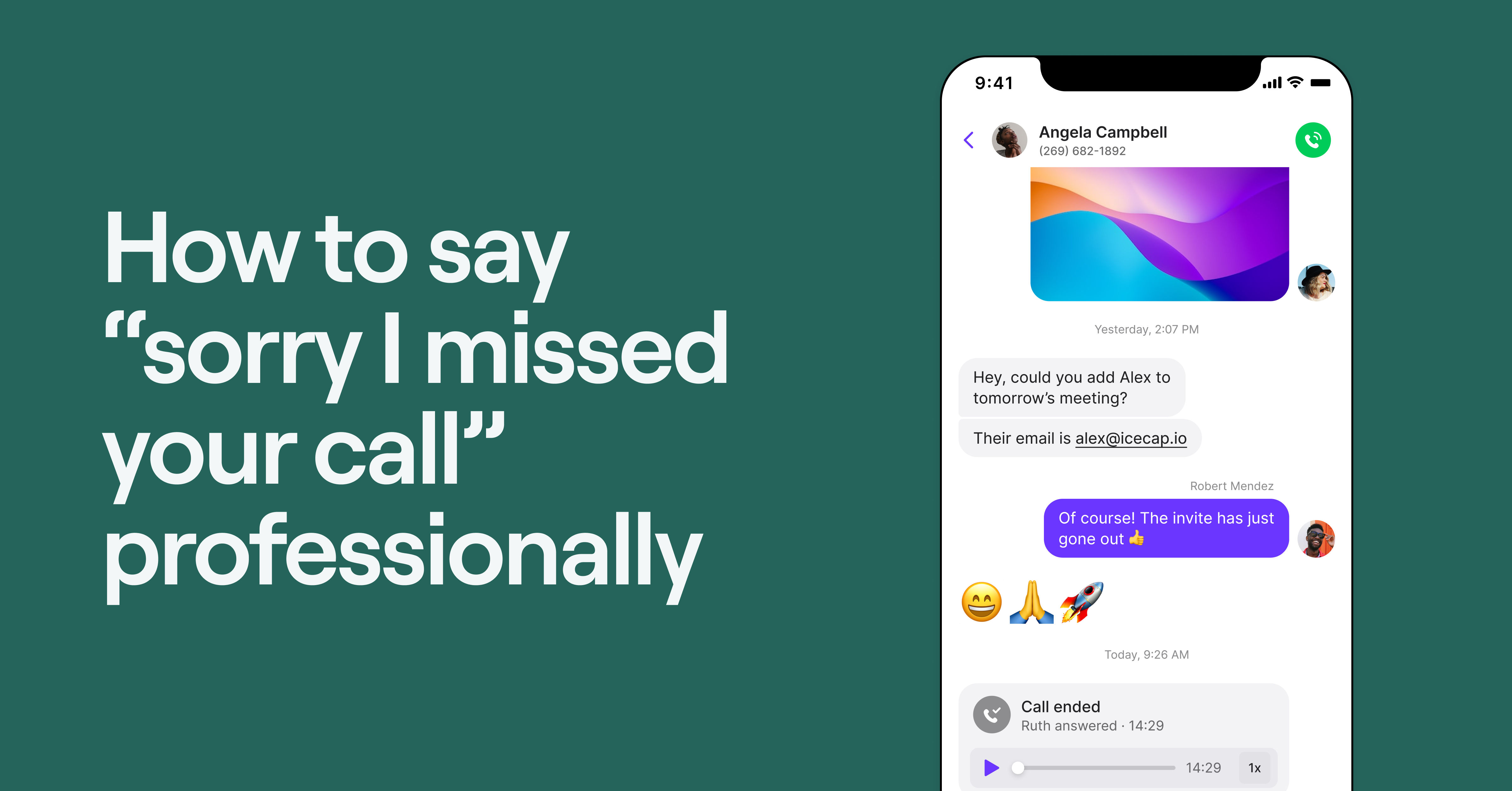
You’ve waited all day for that phone call to come in — so of course, it rings in the 30 seconds you’re away from your desk. You know the caller will be frustrated, and frankly, you are too. But the good news? ‘Sorry’ goes a long way.
If you’re currently staring at a missed call notification, you can use this guide to learn how to say sorry I missed your call professionally.
We’ll give you 16 customizable templates for responding to (and apologizing for) missed calls, then explain how you can avoid missed calls in the first place.
16 ways to say sorry I missed your call professionally
Whether you’re away from your office or out for the day, you can use these templates to respond to a missed call by text or say them verbally if you follow up with a phone call.
Keep in mind we have templates for two different scenarios — during and after business hours — so you can choose the right one for your situation.
P.S. Bookmark this page to use the templates to create snippets in Quo.
1. When a missed call inconveniences your customer
If you know a missed call caused issues for your caller, be sure to acknowledge it with a brief explanation and an opportunity to follow up.
During business hours
“Hi [name], I apologize for missing your call — [brief explanation]. I know you’re busy, so feel free to reply to this message, and I’ll text an answer ASAP. Otherwise, I’ll call you back at [specific time] to discuss [urgent issue].”
After business hours
“Hi [name], sorry I missed your call — I’m out of the office. I know this is urgent, so please reply here, and I’ll get back to you first thing tomorrow.”
2. When you miss a call from an unknown number
Did you miss a call from a number you don’t recognize? A simple, polite message can help set expectations for what happens next.
During business hours
“Hi there! Sorry I missed your call. I was [brief explanation]. I’m back now, so feel free to reply here or call again.”
After business hours
“Hi! I’m out of the office until [date/time]. Please reply here with your question or comment, and I’ll get back to you tomorrow during business hours.”
3. When you miss a call from an interviewee
Job candidates may feel anxious if their call goes unanswered, especially if they need to reschedule or have questions about their interview. Reassure them by letting them know when you’ll be available and, if possible, provide alternative ways to connect.
During business hours
“Hey [name], sorry I missed your call! I’m available now if you’d like to call back. If texting is easier, feel free to reply here, and I’ll respond ASAP.”
After business hours
“Hi, sorry I missed your call. [Business] is closed until [date/time]. If you need to reschedule a job interview, please call [contact info].”
4. When you were on another call
If calls run late, you might need to let incoming calls go to voicemail. Here’s how to craft a meaningful apology while offering to call back at your customer’s convenience.
During business hours
“Hi [name], I just wrapped up another call and saw your message. When would be a good time for me to call you back?”
After business hours
“Hi [name], I’m sorry I missed your call — I was on a conference call that ran late. I’ll be back tomorrow at [time]. When would be a good time for me to call you back?”
5. When you want to keep it brief
Sometimes, a concise response is best. Here are two options for keeping it simple:
During business hours
“Hey! Sorry I missed your call. How can I help? If you’d rather chat on the phone, I’m available for the next [specific timeframe].”
After business hours
“Hi! Sorry I missed your call — I’m out of the office until [date/time]. I’ll call you back then.”
6. For general missed calls
For situations where there’s no specific context, one of these messages can help set the tone:
During business hours
“Hi there, I saw I missed your call. I’m available now — how can I help? Feel free to reply or call back whenever it works for you.”
After business hours
“Hi [name], sorry I missed your call. I’m out of the office but will return on [date/time]. If you’d like to share the details here, I’ll get back to you tomorrow at [specific time].”
7. When you need to be extra professional
Some missed calls require a more formal response. Here are a couple options to get you started:
During business hours
“Hi [name], I apologize for missing your call. I’m be available to return your call from [timeframe range]. If you’d like a quicker response, feel free to text [alternative contact] at [phone number].”
After business hours
“Hi [name], please accept my apologies for missing your call. Rest assured, you’ll be my top priority tomorrow. If this is urgent, please call me at [phone number].”
8. When you miss a call from your team member
Miss a call from a colleague? Keep it casual but considerate.
During business hours
“Hi [name], I saw I missed your call. What’s up? Feel free to text or call back whenever — I’m free until [specific time].”
After business hours
“Hi [name], sorry I missed your call. I’m off until [date/time]. Is this urgent? If so, call me here: [phone number]. Otherwise, I’ll touch base with you tomorrow.”
9. When you want to be polite
Here’s how to politely apologize for missing your caller and set expectations for how they can reach you:
During business hours
“Thank you for calling. We’re unable to take your call at the moment, but we’ll get back to you as soon as possible. For a quicker response, please reach out to [alternative contact] at [phone number] or reply here.”
After business hours
“Hi [name], sorry I missed your call! [Business] is closed until [date/time]. I’d be happy to call you back first thing tomorrow if that works for you. Speak then, and take care.”
10. When you want to say sorry
If you’re already familiar with how to professionally answer the phone, you know it’s crucial to show empathy to your customers. Here are two missed call text templates for doing just that:
During business hours
“Hi [name], I’m sorry I missed your call. I’m available now, so feel free to call or reply here until [time] so we can resolve this ASAP. Let me know how I can help.”
After business hours
“Hi [name], my apologies for missing your call. I’m out of the office until [date/time], but I want you to know you’ll be my first priority tomorrow morning.”
11. When you’re in a meeting
Long meetings are sometimes unavoidable, but a thoughtful message can help smooth things over with callers.
During business hours
“Hi [name], sorry I missed your call. I’m currently in a meeting. Can we connect later today? I’m available between [specific timeframe]. Talk soon.”
After business hours
“Hi [name], apologies for missing your call earlier — I was in a meeting. When is a good time tomorrow for me to follow up? I’m available from [specific timeframe].”
12. When you miss a call about an appointment
Every missed booking call is a missed opportunity — but it’s not lost entirely. Here’s how to respond with professionalism:
During business hours
“Hi [name], sorry I missed your call about booking an appointment. I’m available now to help confirm or adjust your plans. Feel free to reply here or call back when it’s convenient. I’m free until [specific time].”
After business hours
“Thanks for calling bookings and appointments! We’re currently closed until [date/time]. If you need to book, confirm, or reschedule, please visit [booking URL].”
13. When you want to express regret
If you work in a professional setting, you might need a more heartfelt way to say, ‘I’m sorry.’ Here’s how:
During business hours
“Hi [name], I’m sorry I missed our scheduled call. I want to make this right. I’m available to reconnect whenever it works for you. Please let me know.”
After business hours
“Thank you for calling [business]. We’re sorry we missed you — our offices are currently closed. We know your time is valuable, and if this is urgent, please call [contact info], and we’ll do our best to assist you.”
14. When you missed an opportunity
Missing a call that could’ve been significant for your business requires a proactive response. Here are some options to rebuild trust with the caller:
During business hours
“Hi [name], sorry I missed your call earlier. I was [explanation]. I’d love the chance to discuss things further. When is a good time to call back? I’m available during [specific timeframe].”
After business hours
“Hi [name], apologies for missing your call. [Business] is closed until [date/time], but I’d love the chance to reconnect tomorrow. What time works best for you?”
15. When you want to add a personal touch
Personal touches show you value your caller’s time. Here’s how to nurture your 1:1, customer connections:
During business hours
“Hi [name], sorry I missed your call! It’s been a while — how have you been? I hope you’re doing well, and I would love to reconnect whenever it’s convenient for you. I’m free during [specific timeframe] on business days.”
After business hours
“Hi [name], I saw I missed your call. So good to hear from you! I hope your holidays were fantastic. I’ll call you back as soon as possible tomorrow.”
16. When they can text you instead of calling
If texting (not calling) would be the fastest way to resolve something, you can use one of these templates to let your callers know.
During business hours
“Hi [name], sorry I missed your call. When is a good time to call back? You can also text me at [phone number] — I can help a bit faster that way. Let me know!”
After business hours
“Hi [name], sorry I missed your call. Our office is closed from [timeframe], but you can always text me your question. I’ll reply first thing tomorrow morning, or I’ll call you back between [specific timeframe].”
How to instantly reply to missed calls in Quo
Don’t want to manually text ‘sorry’ every time you miss a message? With Quo (formerly OpenPhone), you can set up auto-replies that instantly respond to missed calls, texts, and voicemails.
Auto-replies only go out once every three hours to the same caller, which means you don’t need to worry about spamming customers with replies. Plus, you can customize responses during and after business hours so you can set expectations when you’re not available to chat.
Here’s how to instantly respond to missed calls in Quo:
- First, sign up for a Quo account. You can try our seven-day free trial, but you can’t send text messages before completing US carrier registration due to emerging regulations pushed for by the large US cell providers.
- Under Settings, go to Workspace and tap Phone numbers. Select the number you want to set up auto-replies on for missed calls.

- Under the section that says Auto-replies, create custom auto-replies for the missed calls you receive during and after business hours. You have these options in Quo you can have custom auto-reply messages for:
- Auto reply for missed call without voicemail during business hours
- Auto reply for missed call with voicemail during business hours
- Auto reply for incoming text message during business hours
- Auto reply for missed call without voicemail after business hours
- Auto reply for missed call with voicemail after business hours
- Auto reply for incoming text message after business hours

- Set up your business hours so auto-replies trigger correctly. You can do this by scrolling up to Business hours in the same settings menu and toggling on Enable business hours. After that, select your time zone and schedule.

And that’s it! You’re ready to start sending auto-replies.
Record a professional voicemail greeting in Quo
Auto-replies are just the tip of the iceberg. With Quo (formerly OpenPhone), you can also record custom voicemail greetings that welcome callers differently, depending on whether it’s during or after business hours.
Once you save your voicemail greeting(s), they’ll automatically trigger based on your business hours and call flow settings.
How to prevent missed calls

Missed calls are inevitable when growing your business — but they can be less common if you use the right VoIP provider. With Quo’s shared numbers, you can easily prevent missed calls from happening in the first place by giving everyone on your team access to the same number.
Shared phone numbers let you:
- Split responsibility for incoming calls at the same time. Since everyone on your team can have access to the same phone number and receive incoming calls simultaneously, there’s always someone around to pick up the phone. With expanded coverage, you’ll never miss a call.
- Keep customer info in a centralized hub. This makes it easy to keep track of conversations (think texts, calls, business voicemails, and call recordings) as well as new contacts. No need to piece together different conversations stored in different folders.
- Respond to texts together as a team. Every member of the phone number can see who last responded to which customer, so there’s never a question about what’s been said (or who’s said it). And thanks to real-time typing indicators under each contact thread, you don’t have to worry about sending multiple responses at the same time.
- Delegate work without leaving the app. You can use internal threads to tag reps in comments to get their attention for important tasks. You can also leave notes inside customer contact cards and customize the details with tags, photos, and more.
- Notify team members in order of priority. You can set up three different call handling orders with Quo: simultaneous ring, random order, or custom order. This means you can ring everyone at the same time, pick random teammates to notify, or set up custom groups so calls get answered promptly (and by someone qualified to help).
You can also add Sona, Quo’s AI phone answering service as a fallback option when your team is unavailable or busy and can’t take a call. Sona greets callers, answers questions, and captures messages at a fraction of the cost of a virtual receptionist.You can even train Sona to transfer urgent calls or based on the type of inquiry to your team.
Quo: The best phone system to grow your business

Good communication is saying ‘sorry’ to missed calls. But great communication is avoiding missed calls in the first place. Quo makes it easy to do both with your team, whether you’re queuing up auto-replies or splitting incoming calls with shared numbers.
But why not try it for yourself? Test Quo with your team by signing up for a seven-day free trial.
FAQs
Yes, saying ‘Sorry I missed your call’ is a professional way to respond to missed phone calls. However, more professional environments may require you to use a more formal tone with before and after business hours text messages (such as ‘apologies for the missed call’).
Professional responses can help you follow up on missed opportunities and show customers you care. They also position your business in a professional context and improve your chances of a positive interaction on the next call.
There’s nothing wrong with apologizing for missing a call over voicemail, but your customer might not listen to it straight away. If you automatically respond by text instead, they’ll likely still have their cell phone in their hand and will see your message.
It’s a good idea to ask your caller for an alternative time to catch up, or at least provide a date or time window so they know when you’re unavailable. If that’s not possible, let them know when you’ll be calling, like first thing in the morning or after lunch.